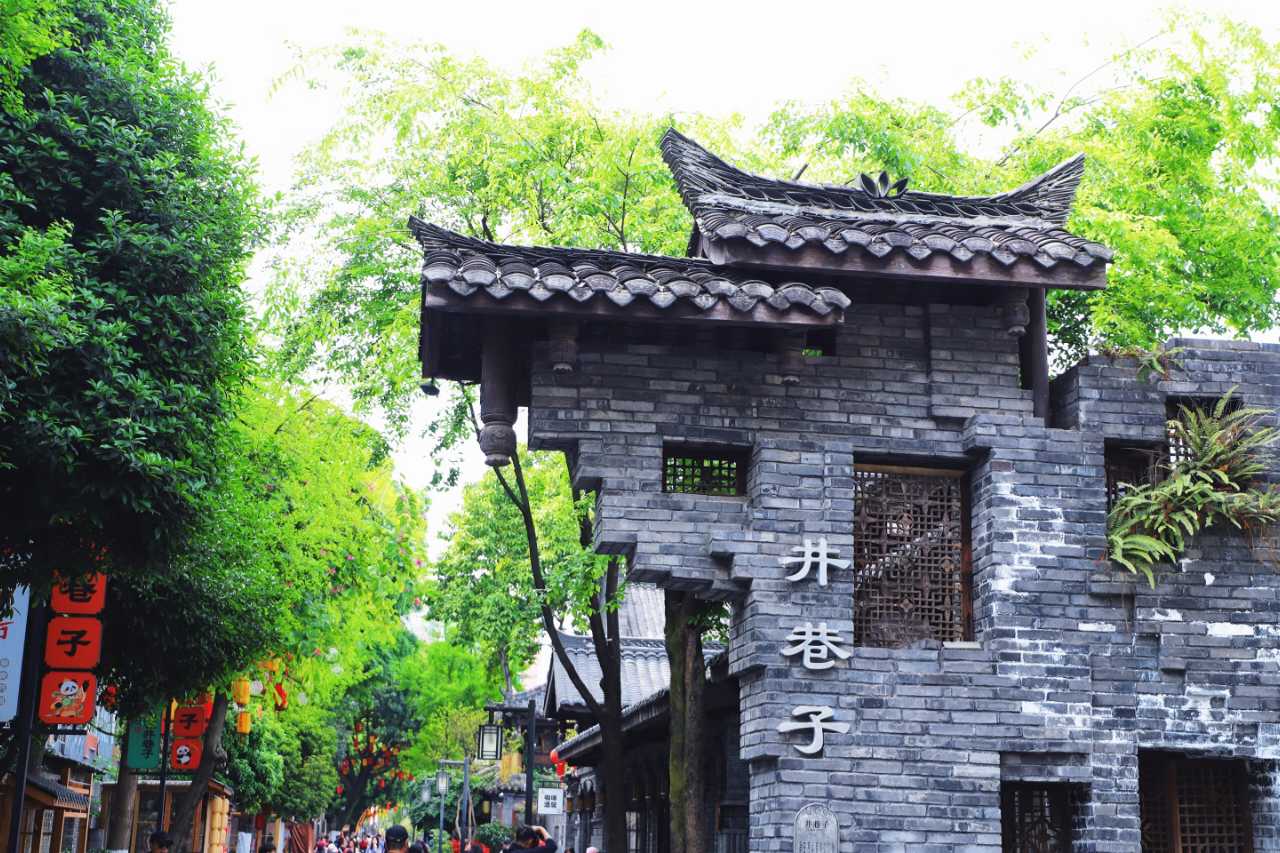
Kuanzhai Alley is the one place in central Chengdu where you can stand still and see three hundred years at once: grey brick, wooden lattice windows, brass door studs — and behind them, a third-wave coffee bar, a Sichuan restaurant with a two-week waiting list, and a shop selling hand-dyed cloth.
It is also the most misunderstood attraction in the city. Visitors arrive expecting "ancient streets" and leave unsure whether they just walked through a museum, a shopping mall, or a neighbourhood. This guide explains what Kuanzhai is, which lane to walk first, what to eat, when to photograph it, and — the question nearly every reader asks — whether to spend your limited time here or at Jinli instead.
What Is Kuanzhai Alley?
Kuanzhai Alley (宽窄巷子, "Wide and Narrow Alleys") is a restored Qing-dynasty residential quarter in Chengdu's Qingyang District, made up of three parallel lanes lined with courtyard houses. It sits just west of People's Park, about 1.5 km from Tianfu Square — genuinely in the middle of the city, not on its edge.
How old is Kuanzhai Alley? The quarter dates to 1718, the 57th year of the Kangxi Emperor. After Qing forces marched through Sichuan toward Tibet, more than a thousand Manchu garrison soldiers and their families stayed behind in Chengdu, and the city built them a walled garrison district — the "Shaocheng" or Little City. Kuanzhai was part of it: the wide lane for officers of higher rank, the narrow lane for lower ranks.
The neighbourhood decayed through the twentieth century, and between 2003 and 2008 it was comprehensively restored — not rebuilt as a theme park, but repaired around the surviving fabric: 45 courtyards in the Qing style, with the original lane widths, grey brick walls and gateways kept intact. That is why Kuanzhai still reads as a place people lived, rather than a set built for visitors.
In practical terms: a free, open-air historic district of three walkable lanes with teahouses, restaurants, shops, galleries and courtyard hotels. No ticket, no gate, no closing time — you walk in off the street.
The Three Lanes: Wide, Narrow & Well
The name is a literal description. Three lanes run parallel, each roughly 400 metres long, and each has a distinctly different character.
Kuan Xiangzi (宽巷子) — Wide Alley. The broadest and busiest — grandest courtyard gates, biggest restaurants, courtyard hotels, most of the tour groups. If you only walk one lane, walk this one, but early.
Zhai Xiangzi (窄巷子) — Narrow Alley. Tighter, more intimate, and arguably the best-looking of the three. The scale forces you to notice details: carved window frames, stone lions, potted orchids on a step. Much of the city's design-shop and café culture has settled here.
Jing Xiangzi (井巷子) — Well Alley. The quietest and the least commercial, named for a well that once supplied the quarter. A long brick relief wall along one side tells the story of old Chengdu life in carved panels — the best free "exhibit" in the district, and most visitors walk past it.
Why is it called Kuanzhai Xiangzi? Because *kuan* means wide and *zhai* means narrow — the lanes were laid out in 1718 with deliberately different widths to reflect the rank of the officers housed on them. The third lane, *Jing* (well), was named for the water source at its heart.
What to See: Courtyards, Brick Walls & Details
Kuanzhai rewards slow looking more than list-ticking. What is actually worth your attention:
The gateway architecture. Each courtyard house (siheyuan) is entered through a stone-framed gate with a raised threshold and a screen wall behind it — built to block spirits, believed to travel only in straight lines. Look up: bracket sets and ridge ornaments differ from gate to gate, and the grander doors of Wide Alley carry rows of brass studs and beast-head knockers that once marked rank.
The brick relief wall on Well Alley. Several hundred metres of carved brick depicting rickshaw pullers, teahouse scenes, children's games and old shopfronts — a free pictorial history of the city.
Courtyard interiors you can enter. Many courtyards are open as cafés, teahouses, bookshops or restaurants. Walking through a gate into a planted inner court, the lane's noise falling away behind you, is the best experience the district offers. You need not buy anything to look, though a cup of tea is the polite way to linger.
What is there to do in Kuanzhai Alley? Wander the three lanes, walk through open courtyards, drink tea, eat snacks, browse craft and design shops, watch ear-cleaning masters at work on the sidewalk, and photograph the architecture. Two to three hours done properly, longer if you sit down.
Food & Tea in the Alleys
Kuanzhai is not the city's best-value eating street — it is the city's most atmospheric one. Come for the setting, and choose deliberately.
Sichuan snacks. The standard Chengdu repertoire is all here: dan dan noodles, chao shou (wontons in chilli oil), rabbit head (if you're brave), sweet fermented-rice desserts and skewers. Quality varies enormously between stalls fifty metres apart; pick the queue of locals over the queue of tour flags.
Sit-down Sichuan. Courtyard restaurants serve full Sichuan banquets in restored halls — beautiful rooms, higher prices, worth it once for the setting. Book ahead at weekends.
Hotpot. Present, but Kuanzhai is not really hotpot territory.
Tea. This is where Kuanzhai genuinely delivers. Courtyard teahouses serve jasmine and green tea by the gaiwan, and the pace is the point: nobody rushes a refill. Watch the ear-cleaning masters at work on the sidewalk chairs — a Chengdu institution, and one of the best places to see it. For the full ritual — lid language, tea types, why the bowl stays covered — read our guide to Chengdu's teahouse culture.
What food is Kuanzhai Alley known for? Sichuan snacks and courtyard dining rather than any single signature dish — plus teahouse culture, which is arguably the real attraction.
Best Time to Visit & Photo Tips
When is the best time to visit Kuanzhai Alley? Two answers, for two different visits.
Early morning (07:30–09:30) is when the lanes belong to residents and delivery bikes. The light rakes low across the grey brick, the gates are empty, and a whole lane is yours to photograph — the only window that reliably gives clean architectural shots.
Blue hour (roughly 18:00 in winter, 20:00 in summer) is when the lanterns come on and the district turns amber. The lanes are crowded but the mood is at its best. Lanterns follow sunset, so the exact time shifts by season.
Midday on a weekend is the worst of both worlds: hard light, maximum crowds.
Photo tips that actually help: shoot the gates rather than the crowds — frame a doorway, wait for a gap, take the shot. Use the lanes as leading lines: stand at one end and let the walls converge. Look down at thresholds, drains and paving, and up at roof ridges. Ask before photographing people: the ear-cleaners and tea masters are working, and a small purchase is the graceful way to earn a portrait. Skip flash indoors — it flattens the wood and usually breaches shop rules.
Kuanzhai vs Jinli: Which Should You Visit?
Nearly every reader is quietly making this comparison. They are different products, and the choice depends on what you want from the hour.
| Kuanzhai Alley | Jinli Street | |
|---|---|---|
| Period | Qing-era garrison quarter (1718) | Rebuilt commercial street beside a Qing temple |
| Feel | Restored courtyards, design shops, cafés | Dense snack stalls, red lanterns, souvenir trade |
| Food | Courtyard restaurants + snacks | The city's widest snack concentration |
| Crowds | Busy, but courtyards offer escape | Very busy, linear and hard to escape |
| Best for | Architecture, tea, slow afternoon | Snacking, evening lanterns, buying gifts |
| Time needed | 2–3 hours | 1.5–2 hours |
Which is better, Kuanzhai or Jinli? Buildings, courtyards and a slower sitting-down experience: Kuanzhai. Eating your way down a lantern-lit street in the evening and buying small gifts: Jinli. They are 20–30 minutes apart, so travellers with a free afternoon often do both — Kuanzhai late afternoon, Jinli after dark. Compare properly with our Jinli Street guide.
One honest caution: both are commercial, and neither is a "hidden gem." What makes Kuanzhai worth it is that the courtyards still work — step through a gate and the crowd disappears.
How to Get There + Nearby
How do I get to Kuanzhai Alley? Easily — it is one of the most accessible sights in Chengdu.
- Metro Line 4 → Kuanzhai Alley Station (宽窄巷子站), Exit B puts you roughly 150 metres from the Wide Alley entrance, a two-minute walk.
- Metro Line 2 → People's Park Station also works; exit and walk west for about ten minutes.
- Taxi or DiDi: ask for 宽窄巷子 — every driver knows it. Traffic around Changshun Street is heavy in the evening.
- On foot it is a comfortable walk from People's Park and Tianfu Square.
Nearby, within walking distance: People's Park — the city's living room, with teahouses, ear-cleaning and the matchmaking corner; Tianfu Square and the Chengdu Museum if you want to extend the day indoors; and Qintai Road, the restored Han-dynasty-style street immediately west, often far quieter than Kuanzhai itself.
Kuanzhai sits so centrally that it slots into any city day. Our complete 1–5 day Chengdu guide sequences the panda base, old streets, food and day trips by trip length.
Our Tea-Dye Studio in the Alleys
No other guide to Kuanzhai can say this: we are not writing from a desk on another continent. Our workshop is here — a courtyard off the lanes where cloth has been dyed with tea since 1908, and where the pieces in our shop are still sewn and coloured by hand.
It changes what we notice: which courtyards are genuinely old and which are reconstruction, that the light on Zhai Xiangzi is best at about eight, and that Jing Xiangzi's brick wall is what visitors most often miss. If you are in Chengdu, come and see the dye baths; if not, the same craft travels — our tea-dyed scarves and plush charms are made in these courtyards and shipped worldwide.
FAQ
Is Kuanzhai Alley free? Yes. There is no admission charge and no gate — it is an open public district, walkable 24 hours a day.
How long do I need at Kuanzhai Alley? Two to three hours at an easy pace, including a teahouse stop. Add an hour if you plan a sit-down meal.
Is Kuanzhai Alley worth visiting? Yes, if you want Qing-era courtyard architecture and teahouse culture in a central, walkable setting. It is commercial — go early or at blue hour, and step into the courtyards to escape the crowds.
Kuanzhai or Jinli — which is better? Kuanzhai for architecture, courtyards and tea; Jinli for snack food, lanterns and souvenirs. Many visitors do both in one afternoon and evening.
What is the best time to visit? Early morning (07:30–09:30) for empty lanes and clean photographs; blue hour for lanterns and atmosphere. Avoid weekend middays.
How do I get to Kuanzhai Alley? Metro Line 4 to Kuanzhai Alley Station, Exit B — about 150 metres from the Wide Alley entrance. Metro Line 2 to People's Park also works.
Last Updated: October 19, 2026 · Opening conditions and transport details are re-verified quarterly by our Chengdu-based team.
Disclaimer: Opening hours of individual shops, restaurants and teahouses change without notice, and some courtyards are privately operated. This article is general travel guidance only. Confirm current details locally, and respect signage in courtyards and shops.
Sources:
- Chengdu Kuanzhai Alley historic district official visitor information — three lanes (Kuan/Zhai/Jing), 45 restored courtyards, 1718 origin, 2003–2008 restoration
- Chengdu Metro network information — Line 4 Kuanzhai Alley Station, Line 2 People's Park Station
- On-the-ground verification by our Chengdu Guide Team (Oct 2026)