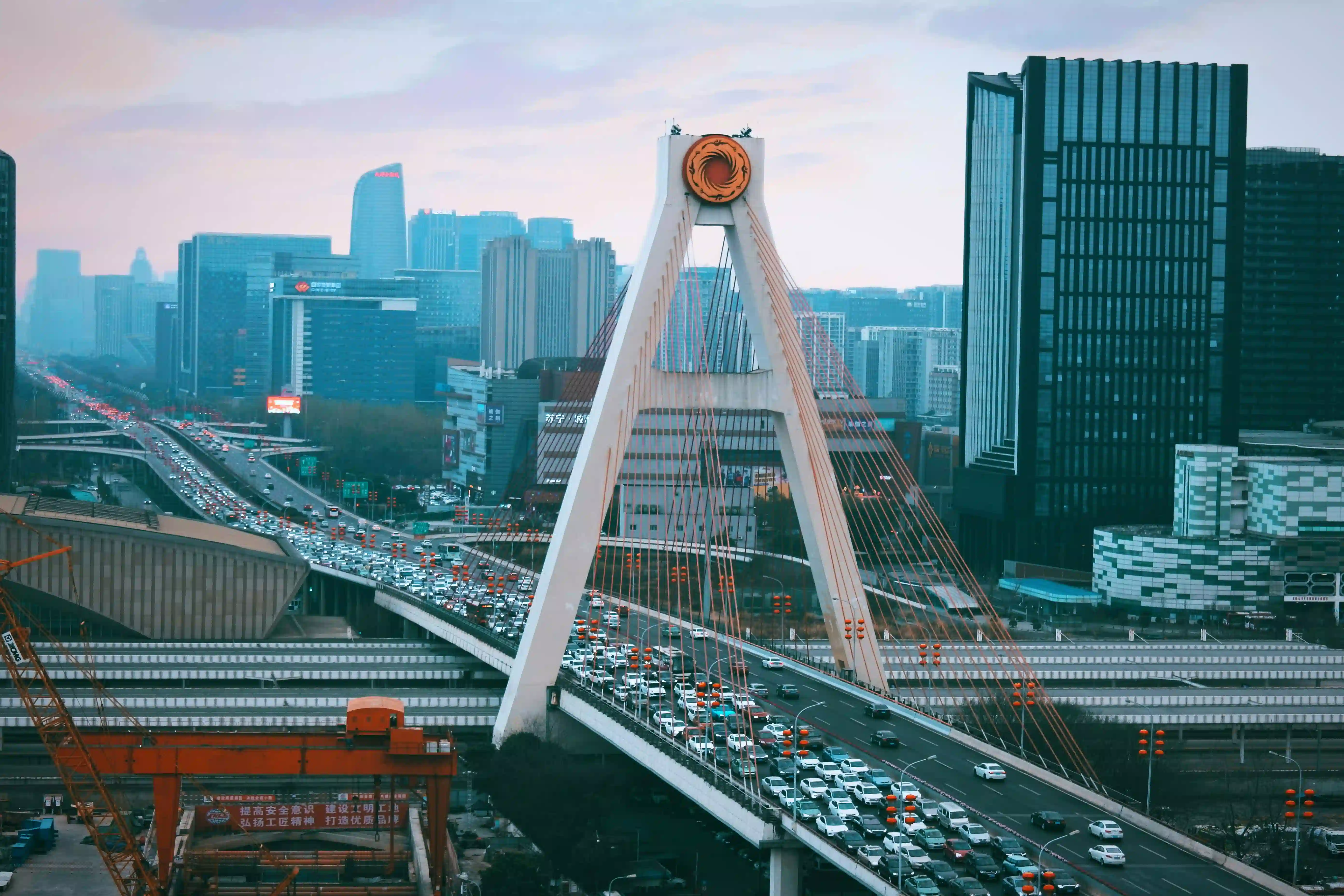
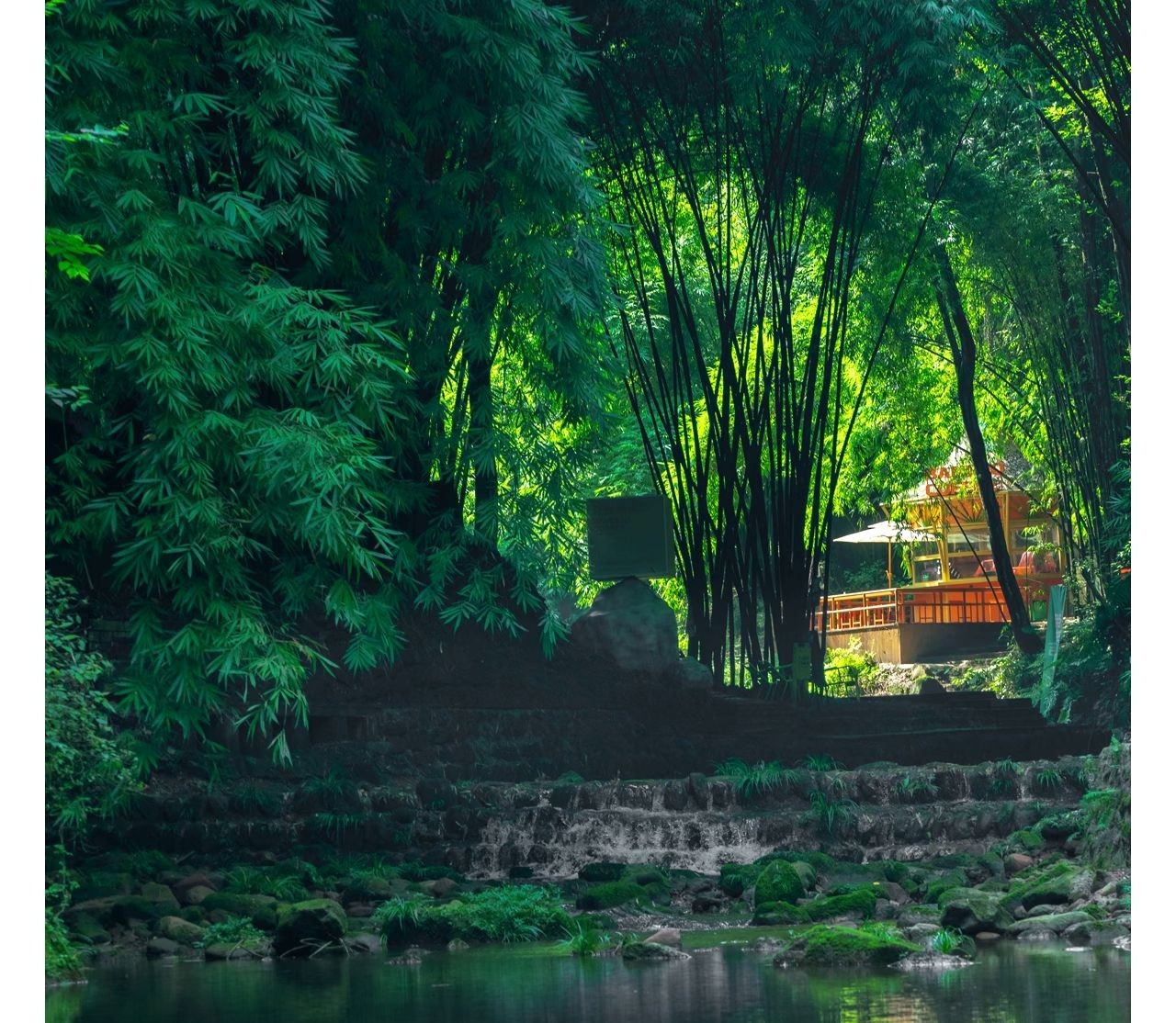
Chengdu has a talent for making you forget that it sits in a basin ringed by green. An hour and a half after you leave the traffic on the Second Ring Road, the highway thins, the buildings drop away, and the bamboo starts — first in clusters, then in groves, then as an actual sea of it, ten thousand *mu* of green crowding both sides of a valley road with a shallow stream running alongside.
This is the day trip we send friends on when they say Chengdu is "too relaxing." It goes to a place most guidebooks haven't found yet: the Lushan Bamboo Sea in Qionglai, paired with the two-thousand-year-old town of Pingle for lunch. Updated as of August 2026, with the timing we actually use.
Here is the whole day, hour by hour.
07:00 — Leave Before the City Wakes
If you're driving (recommended): out of Chengdu on the Chengwenqiong expressway, navigation set to Lushan Bamboo Sea, Jinhua Village, Pingle Town (芦沟竹海). Ninety minutes, good road the whole way. There's a reason for the early start, and it isn't traffic — it's temperature. By eleven, a bamboo valley in summer turns from cathedral-cool to greenhouse. Arriving early buys you the good hours.
If you're going by train: Chengdu East or West to Qionglai Station (about 26–30 minutes, ¥25–35), then Bus 304 or 11 from outside the station to Pingle Ancient Town (35–40 minutes), and a short taxi or 1-km walk from town to the bamboo valley. Doable, cheap, slightly slower — leave even earlier.
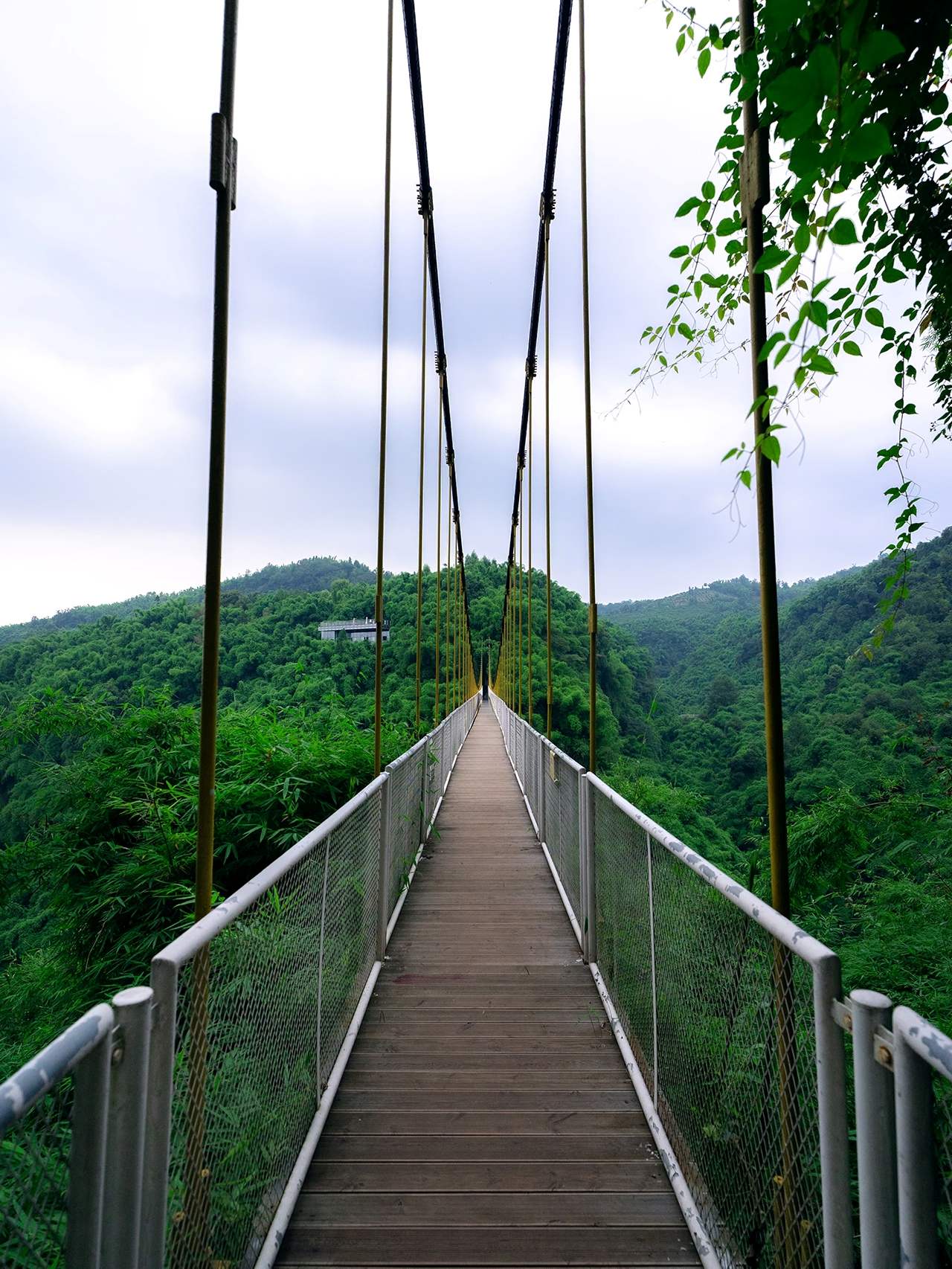
One warning before you go, and it matters: there are *two* bamboo seas next to Pingle. One is the commercial Chuanxi Bamboo Sea — entrance fee ¥60, glass walkways, crowds. The other, Lushan, is free, wilder, and quieter. Tricycle drivers around Pingle are famous for cheerfully taking foreigners to the paid one "by mistake." Say Lúgōu (芦沟) clearly, or show the characters.
08:30 — Into the Green
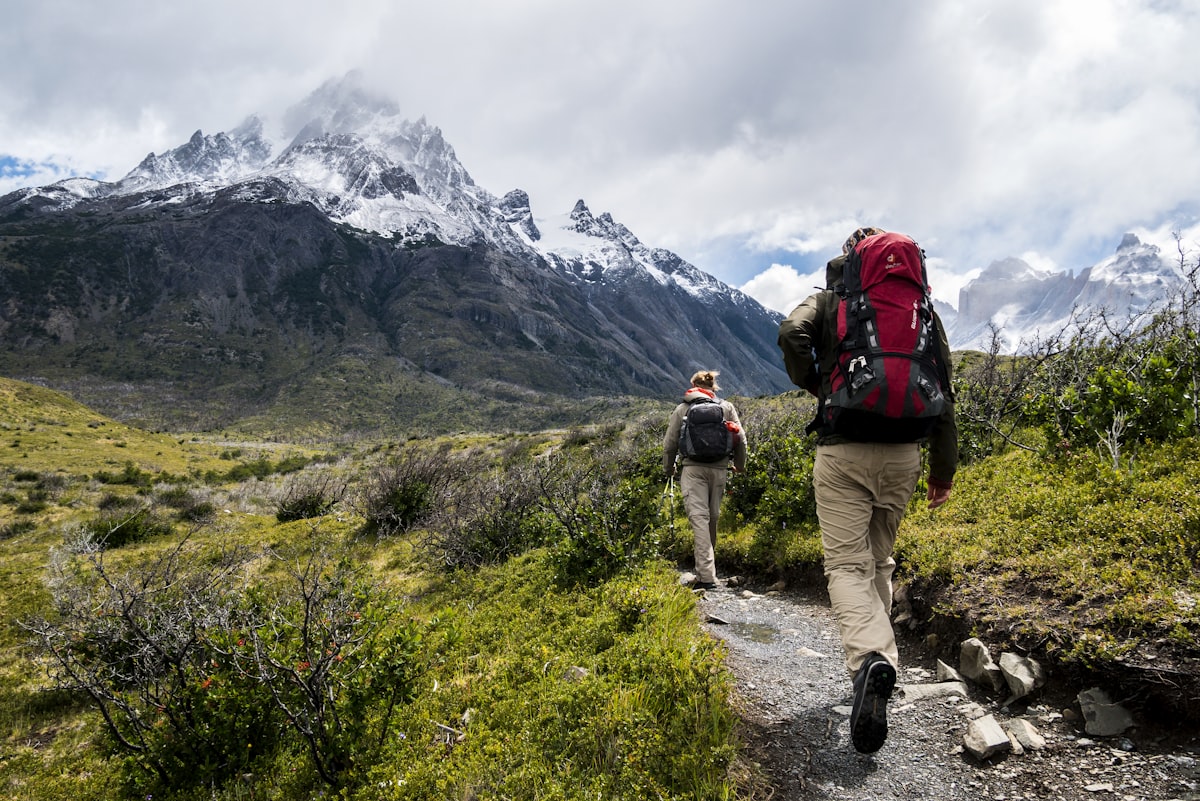
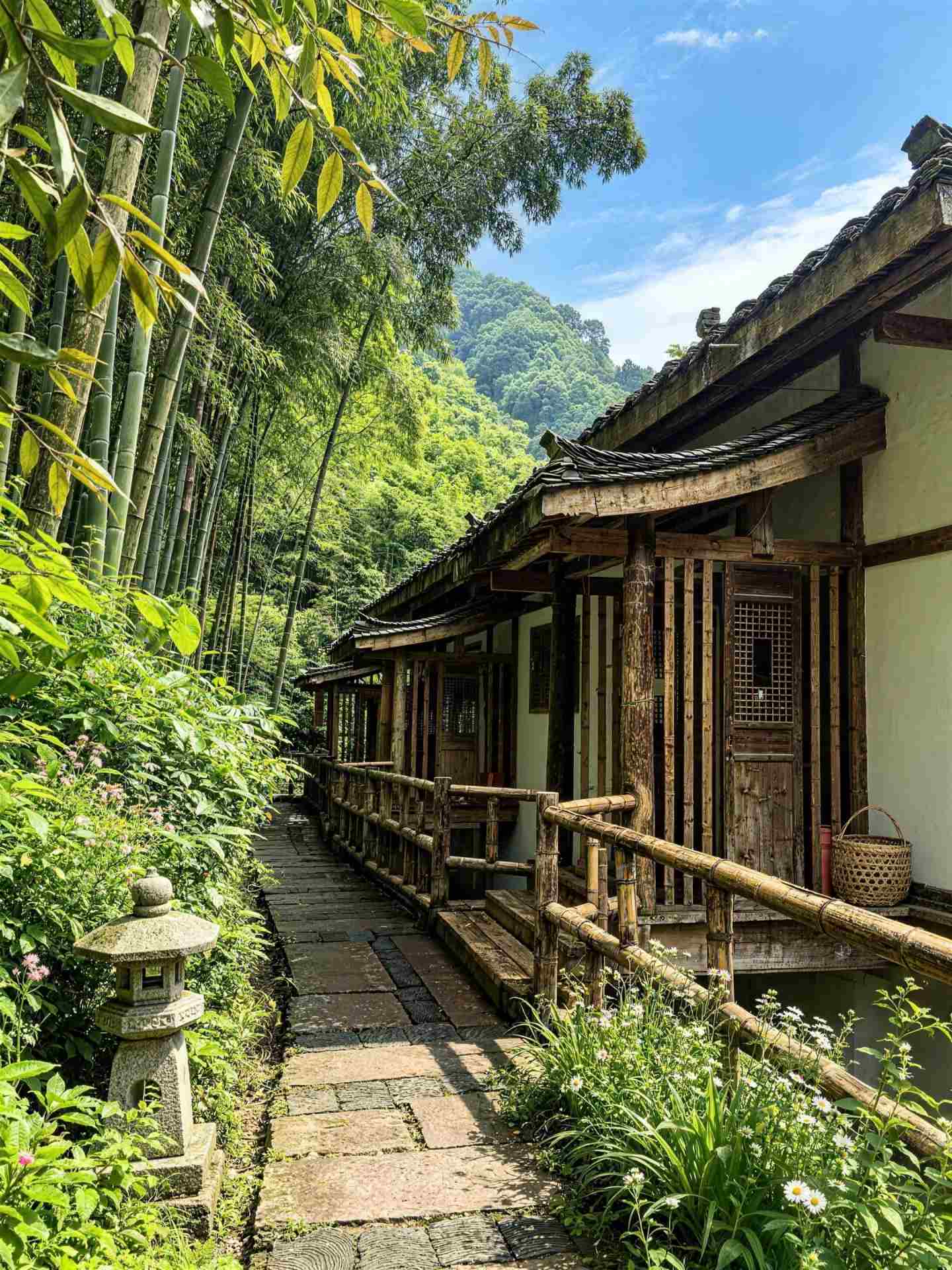
The valley opens with a corridor of tall *ci* bamboo — the kind Sichuan farmhouses are built from, in places so dense the canopy closes overhead. The main route is a roughly four-kilometer loop along the stream, flat enough that locals bring small children and elderly parents. The air is genuinely different in here: several degrees cooler, and that green, mineral smell of running water and cut bamboo.
The quiet paths deserve their name. Walk far enough in and the loudest thing for a quarter hour is the stream, and then somebody's bamboo pole knocking against a stone.
Three things worth slowing down for along the way:
The paper-making ruins. Around a kilometer in, moss-covered stone mills, channels, and troughs sit in the shade — remnants of a Song-dynasty workshop that ran on water power, where bamboo was pulped into paper for the tea shops of the old Southern Silk Road. The road you drove in on follows the same trade route. Pingle was its staging town.
The stream itself. Ten to thirty centimeters deep, clear enough to see fish, cold enough to numb your ankles in a minute — which is exactly the point in summer. Bring water shoes; the stones are polished slick, and flip-flops fail here. Children stationed at the shallows spend entire afternoons turning over rocks looking for crabs.
The fish cliffs and the heights. A steeper spur trail climbs to an outcrop with a view over the valley — and, oddly, a 1935 Red Army defensive position, dug into the rock during the Long March's passage through Sichuan. It's one of the strangest picnic views in the province: bamboo, mountains, and a machine-gun nest.
11:30 — Out of the Valley, Into the Noodles
Bring snacks and water into the bamboo — there are almost no vendors inside, by design. Lunch is back in Pingle, five minutes away by car, and it's the reason this itinerary beats a pure nature day.
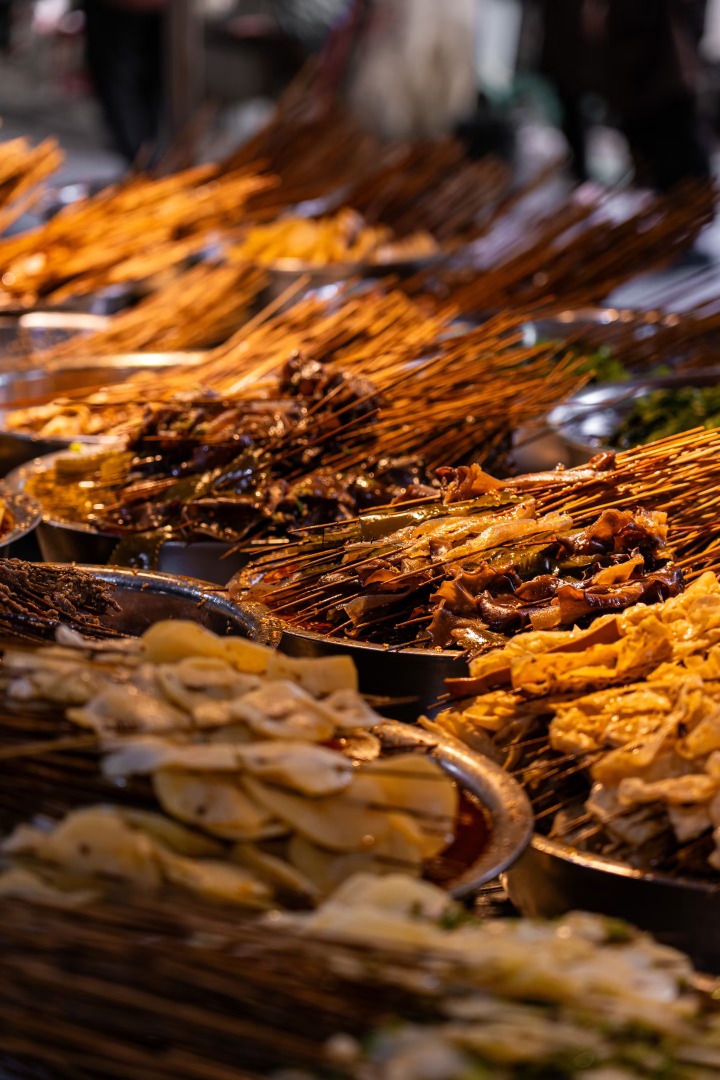
The order is not optional: milk-soup noodles (奶汤面) and bobo chicken (钵钵鸡). The noodle broth is simmered from chicken, pork trotters, and bones until it's opaque white — richer than it sounds, ¥10–15 a bowl. Bobo chicken comes skewered and cold in chili oil; pull what you want, count the sticks, pay the count. Together, ¥25 a person, and you will think about the noodles for weeks afterward. Find any place full of locals at noon; the famous old shops cluster near the river.
13:00 — The Town That Runs on Slow
Pingle is what Chengdu's tourist streets were like thirty years ago. The old town is free to enter, built along the Baimo River with Ming-and-Qing wooden buildings, and roughly seven in ten of its residents are original townspeople rather than shopkeepers imported for tourism.
Two things to do with a full stomach:
Walk the Leshan Bridge (乐善桥). A Qing-dynasty seven-arch stone bridge, the best preserved in western Sichuan. Look down at the deck stones as you cross — the smooth-worn hollows are hoof-prints from the caravans that crossed here for centuries, carrying tea out and paper down.
Sit under the thousand-year banyan. On the riverbank, a tea under a tree so wide it has its own gravitational field. This is where the day turns from a hike into the thing you actually came for — a ¥15 cup of jasmine tea and nowhere to be. If you've read our guide to the gaiwan, this is the perfect place to practice the lid language.
Between April and October, the river's shallow banks are where the whole town goes to stand in the water. Join them; the bus back to Chengdu has never once left early because someone's feet were dry.
17:00 — The Drive Back (or the Fireflies)
In June through early September there's a third option: stay past dark. On summer nights, fireflies come out along the road into the bamboo valley, most active between about half an hour after sunset and nine o'clock. It isn't a light show — dozens, not thousands — but seeing them at all, forty minutes from a city of twenty million people, is quietly astonishing. Local guesthouses can arrange an evening tricycle out to see them; staying the night turns this itinerary into the relaxed two-day version.
Otherwise: back in the car by five, Chengdu by six-thirty, dinner in the city by seven. A full day out, and you'll have spent less than a single entry ticket at most Chinese attractions.
If Bamboo Isn't Enough: Two Variations
Want waterfalls and climbing instead? Mount Qingcheng's Back Mountain, a 30-minute high-speed train from Chengdu plus a shuttle bus, is the classic alternative — twenty-yuan entry, cliff walkways, cascades, and the famous "幽" (secluded) microclimate. Harder walking, bigger payoff for hikers.
Want the *epic* bamboo sea? Shunan Bamboo Sea near Yibin is the famous one — a hundred square kilometers of it, and genuinely spectacular — but it's 3+ hours from Chengdu each way. It can technically be done in one very long day by train and connection, but we don't recommend it; it deserves a night inside the park. Save it for a slower trip.
Before You Go: The Short List
- Two bamboo seas, one trap. Lushan (芦沟) is free; Chuanxi (川西) is ¥60. Confirm before you follow anyone. - Mosquito repellent, seriously. The valley is genuinely buggy in summer. Reapply after the stream. - Water shoes over flip-flops. Slick stones, wet feet, no negotiation. - Snacks and water in the valley; lunch in town. Nothing for sale inside the bamboo. - Watch for snakes on the deeper trails. Rare, but it's a real ecosystem, not a theme park. - Cash and DiDi both work in Pingle; signal in the deep valley can fade in and out.
The point of this day isn't the bamboo, really. It's the reminder that the Sichuan basin's default state — the one under all the hotpot and neon — is quiet, green, and in absolutely no hurry. If you're still sorting out the arrival logistics, start with the practical entry guide; if this pace appeals, our guide to waiting properly for tea will train you for the rest of the trip.
---
Last Updated: August 22, 2026 · Transport times, prices, and site details verified by our Chengdu-based team and re-checked quarterly.
Disclaimer: Rural roads, bus schedules, and site conditions (including firefly seasons and river depths) vary by season and weather, and may change without notice. Swimming and stream-walking are at visitors' own risk; water levels rise after rain. Restaurant recommendations reflect conditions at the time of writing. This article is general travel guidance only — check current conditions locally before setting out.
Sources:
- Qionglai municipal tourism information on Lushan Bamboo Sea and Pingle Ancient Town - On-the-ground verification by our Local Guide Team, Chengdu (Aug 2026) - Mount Qingcheng Back Mountain official visitor information; Shunan Bamboo Sea official ticketing notices