The tea has been gone for ten minutes.
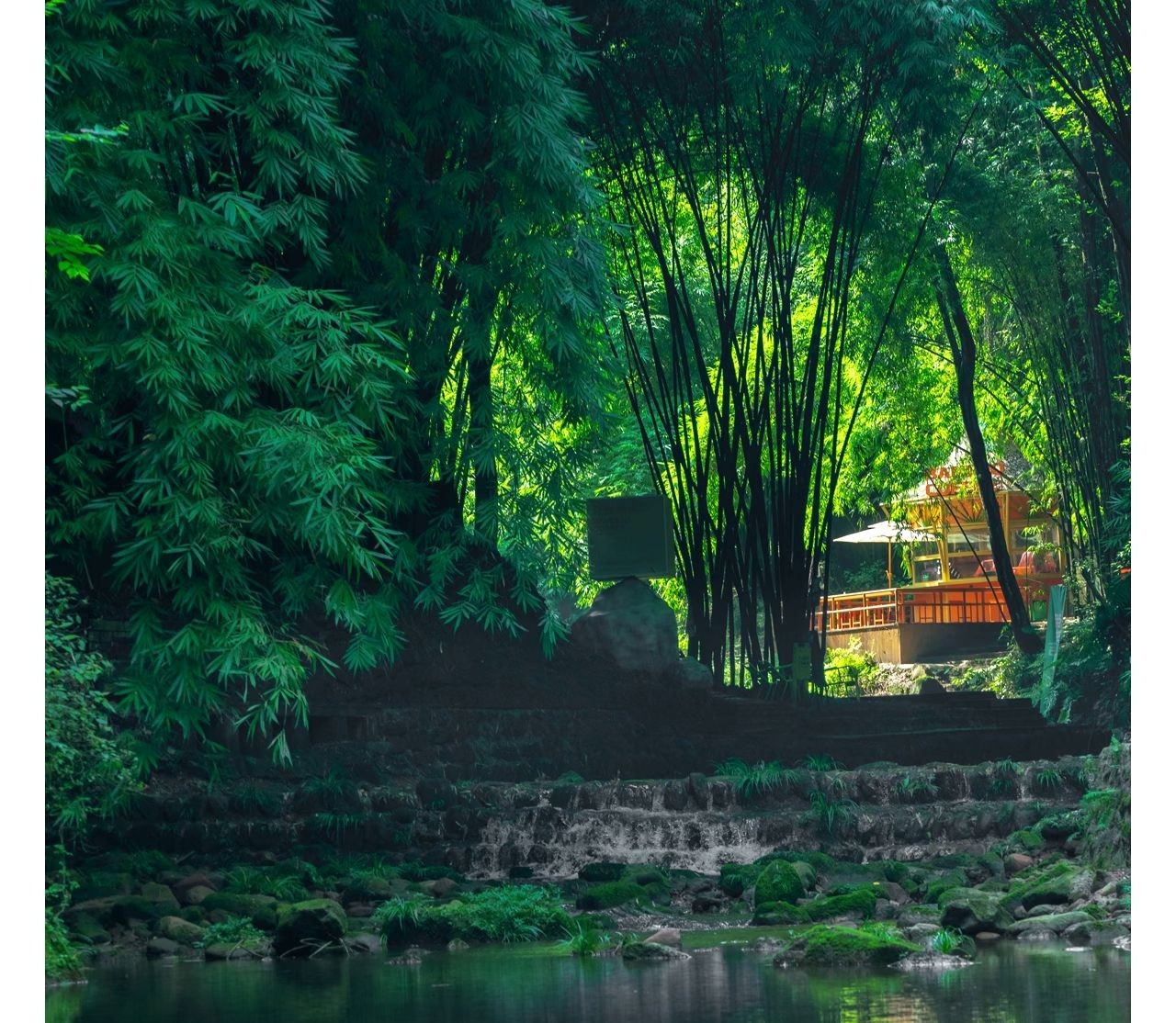
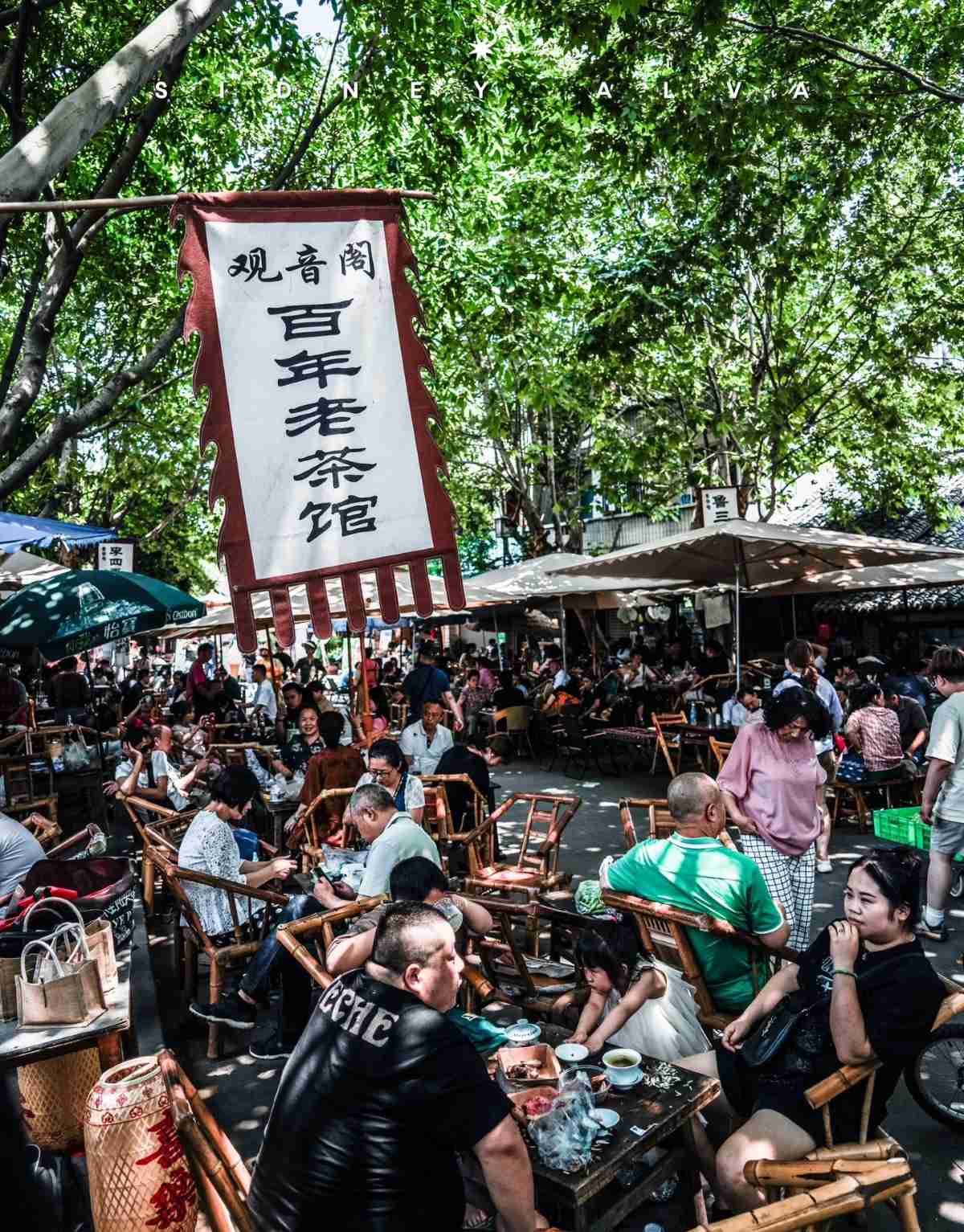
Your bowl sits empty on its saucer in a Pengzhen teahouse — dirt floor, bamboo chairs, mahjong tiles clacking somewhere behind you. A man with a copper kettle the length of your arm glides between tables, refilling everyone around you. He has not looked at you once. You begin to wonder whether you've done something wrong.
Then the old man beside you reaches over, lifts his lid, and lays it face-down against the edge of his saucer. One minute later, the kettle arrives at his table. Not a word was spoken.
That's when it clicks: in a Sichuan teahouse, the asking is silent. And the vessel in front of you isn't just a cup — it's a small operating system, three pieces that the locals have been fluent in since childhood.
An Object Born in Chengdu
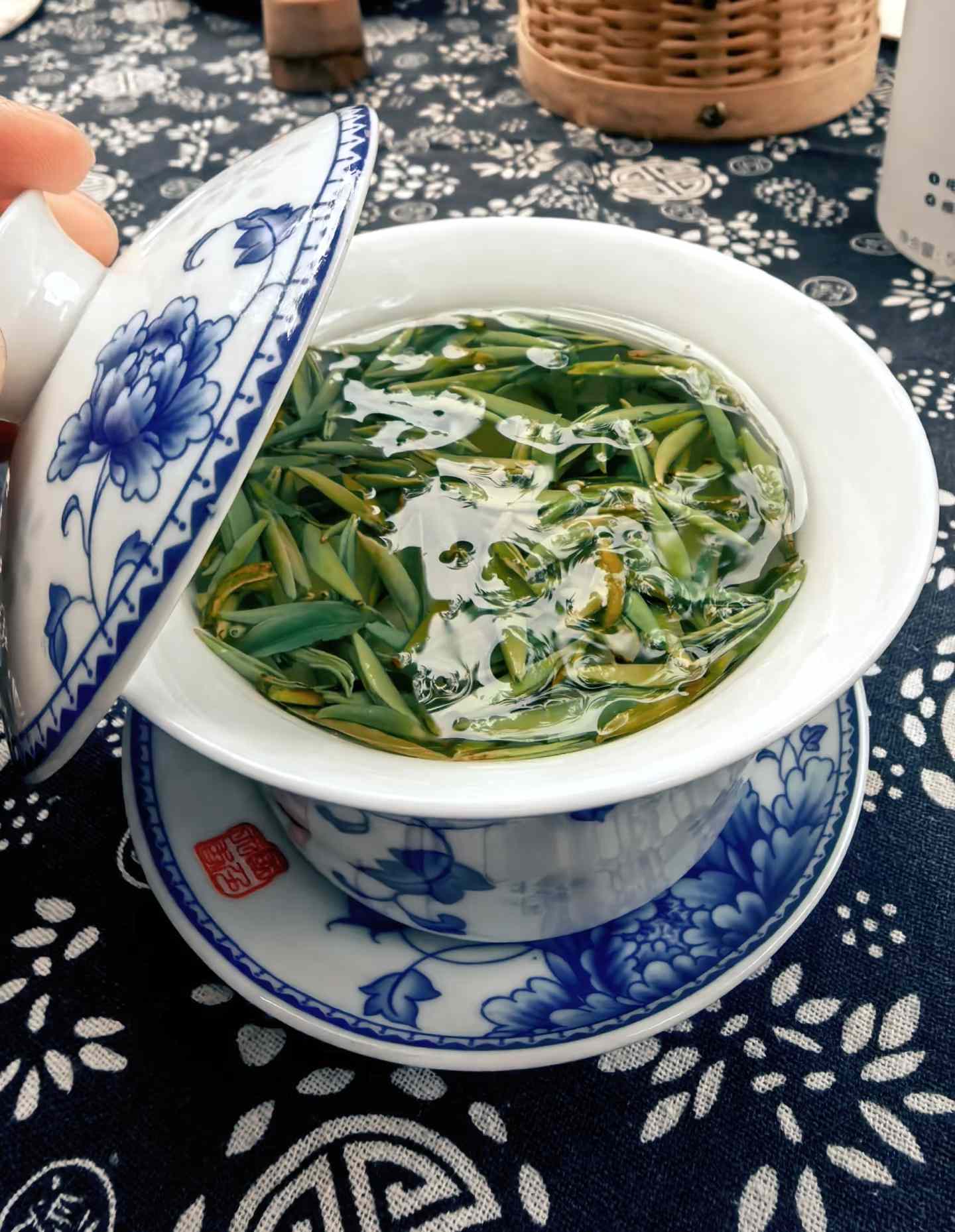
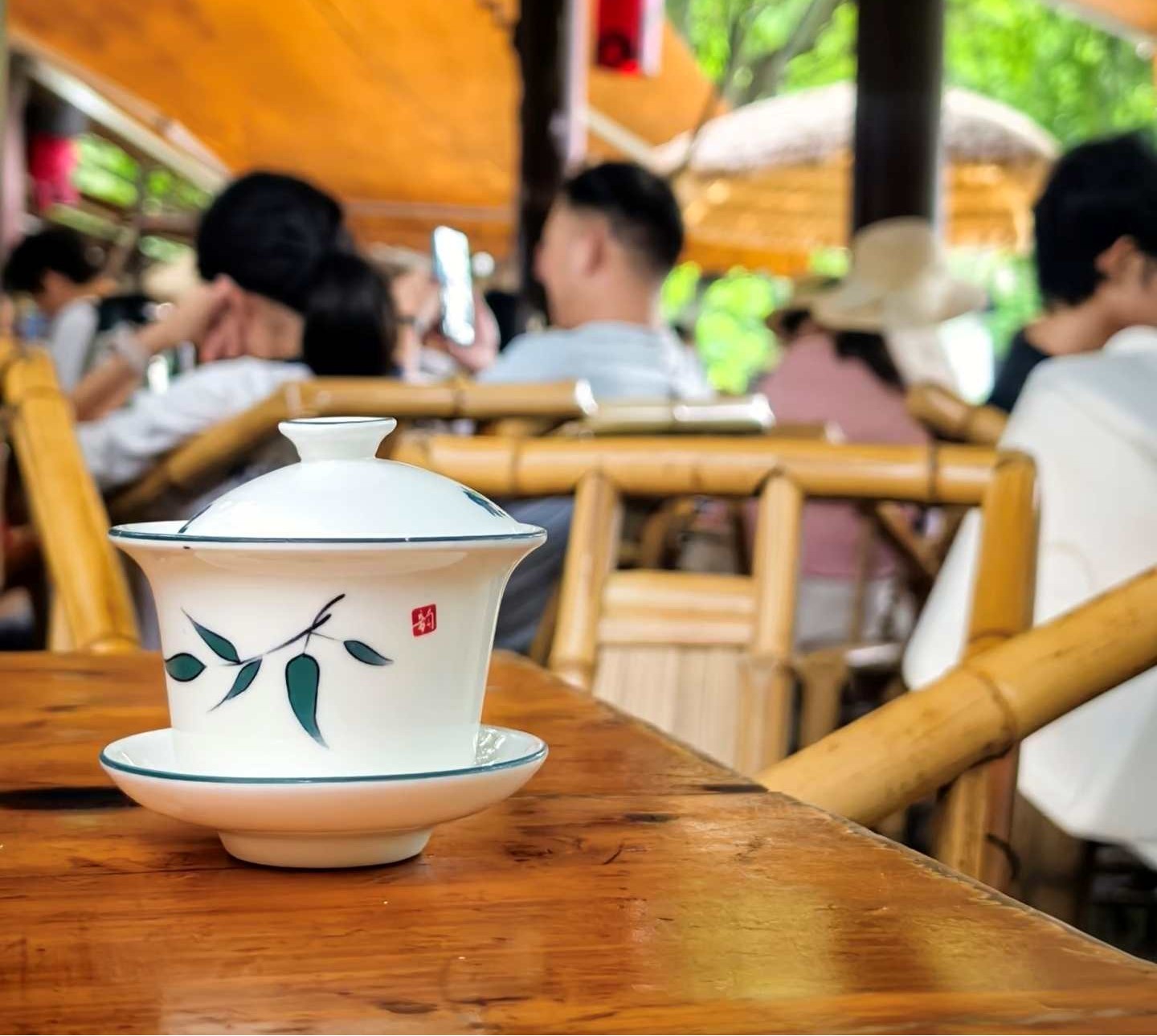
The gaiwan (盖碗) is three parts: a lid, a bowl, and a saucer. The Chinese call it the "Three Talents Bowl" (三才碗) — lid as heaven, saucer as earth, bowl as humanity, a pocket-sized cosmology you can hold in one hand while gossiping with the other.
Its origin story is pleasingly local. Around 780 CE, the daughter of Cui Ning — the military governor of this region — kept burning her fingers on her teacup. She sat the cup in a small dish to carry it, and when it slid around, fixed a wax ring in the center to hold it steady. Craftsmen refined the idea, the saucer caught on, and by the Ming dynasty someone had added the lid. The gaiwan, in other words, was invented in Chengdu because a woman wanted her tea without pain. It has been behaving like a local ever since.
To understand why nobody rushes — not the tea drinker, not the tea pourer — you have to understand what each piece is actually for.
The Lid Speaks
In the old teahouses, the lid is your voice. Its position on the saucer is a quiet sentence, and the staff read it from across the room:
- Lid face-down, leaning on the saucer — *refill, please.* The classic move. Try this before you wave at anyone. - Something resting on the lid — a leaf, a lighter, a stone — *I'm stepping out, don't clear my bowl.* Teahouses charge per bowl, not per hour; this protects your purchase and your seat. - Lid standing upright beside the bowl — *I'm short on cash, let me settle next time.* Strictly for regulars. As a foreigner, this one is for understanding, not using. - Lid face-up inside the bowl — *I'm done, you can clear the table.*
A fair warning from our own trial and error: at the century-old houses like Pengzhen's Guanyin Teahouse, the lid language still works exactly as written. At Heming Teahouse in People's Park — more tourists, more traffic — a polite raised hand works fine too. The old men will appreciate the attempt either way.
The lid has a second job: it's your brewing control. Rest it slightly ajar to let the tea cool and the leaves settle. Then, if you want the flavor to deepen, skim the surface of the water with the lid's edge — a light skim loosens the brew, a firm, slow scrape across the leaves pushes it stronger. Locals adjust their tea all afternoon this way, one small correction at a time.
The Bowl, and Why Waiting Is Chemistry
The bowl is the "humanity" of the three talents because it's the part that meets your mouth. What's usually in it, in descending order of local loyalty:
Jasmine tea (茉莉花茶) — the default. Ask for 三花, "Three Flowers," the classic grade, and you'll get the working-class jasmine that Chengdu runs on. ¥10–20 a bowl in the old town.
Mengding Ganlu (蒙顶甘露) — a delicate green from Mengding Mountain, one of the oldest cultivated teas in China, imperial tribute for over a thousand years.
Zhuyeqing (竹叶青) — an Emei Mountain green harvested in early spring, all buds and freshness.
Tuocha (沱茶) — a compressed, earthy bowl of tea for the stubborn traditionalists.
Now, the waiting. Here's what nobody explains: green and jasmine teas are made of tender leaves, and boiling water scorches them bitter. The water needs to arrive at roughly 80–90°C — and that is precisely what the famous meter-long spout of the copper kettle is *for*. By the time the water travels that long copper channel in a thin arc, it has cooled to exactly the temperature the tea wants. The theatrical pour is a temperature control disguised as a performance.
"The writer Lu Xun put it plainly a century ago: good tea wants a gaiwan — the color comes out clear, the taste sweet, "faintly fragrant, slightly bitter.""
And the tea itself changes across the afternoon. First steep bright, second rounder, third mellow. Locals nurse one bowl for three or four hours not because they're stingy but because the bowl is still telling them new things. Refills cost nothing or next to nothing — so the only thing you'd be rushing toward is worse tea.
The Saucer Holds the Ground
The saucer — "earth" — is the teahouse itself, and it's the piece that makes the other two make sense. What you're actually buying for your ¥10–30 isn't tea; it's a seat on the ground of Chengdu society, for as long as you want it.
This is where the kettle man earns his title. The long-spout pour became a genuine martial art — moves with names like "Sea-Dredging the Moon" and "Sword on the Back," the kettle swung behind the shoulder, under the arm, a thread of boiling water landing in your bowl from a full meter away without a drop lost. It began as pure practicality: reaching across crowded tables without elbowing anyone, and cooling the water on the way. It's now recognized intangible cultural heritage, and the real masters are worth watching with the same attention you'd give a musician.
Where to plant your saucer:
Pengzhen Guanyin Teahouse — the one that time forgot, forty minutes south of downtown. Dirt floor, kettles on coal stoves, old men who arrived at seven a.m. and are not leaving. The lid language is fully operational.
Heming Teahouse, People's Park — the century-old classic, easiest to reach, where the kettle performances and ear-cleaning masters circulate among a friendly mix of locals and visitors.
A one-bowl jasmine house anywhere — follow any office worker at lunch. If the bowl costs ¥10 and the chairs are plastic, you've found the real Chengdu.
So Why Don't They Rush?
Because the refill is nearly free, the tea is still improving, and the afternoon isn't going anywhere. Rushing a gaiwan of jasmine in Chengdu would be like fast-forwarding the slowest, cheapest luxury available in the city.
Learn the lid, let the water cool on its long way down, and order one bowl for the whole afternoon. If you want the fuller map — which teahouses, which neighborhoods, what to eat alongside. And if this is all still ahead of you, start with the practical entry guide and work your way to the tea.
---
Last Updated: August 24, 2026 · Tea types, prices, and teahouse details verified by our Chengdu-based team and re-checked quarterly.
Disclaimer: Teahouse hours, prices, and availability of performances (such as long-spout kettle shows) vary by venue and season, and some historic venues may alter operations without notice. The lid signals described are traditional conventions; individual teahouses may interpret or enforce them differently. This article is general cultural guidance only.
Sources:
- Chengdu teahouse culture records on gaiwan origins and lid-signal conventions (multiple local documentations cross-verified) - Lu Xun, "Drinking Tea" (喝茶), 1924 — the gaiwan passage - Intangible cultural heritage documentation on Sichuan long-spout copper kettle tea art - On-the-ground verification by our Local Guide Team, Chengdu (Aug 2026)