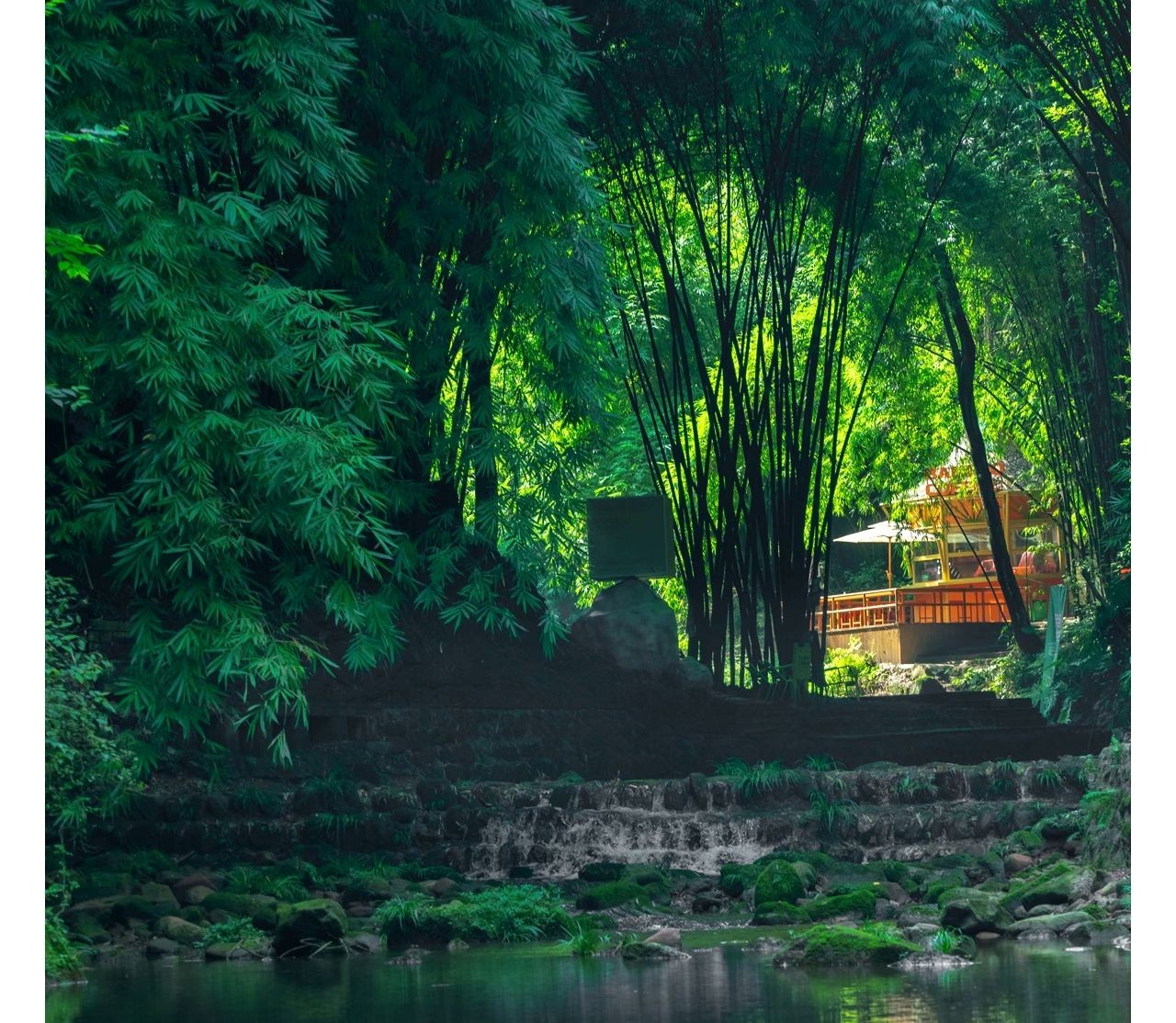
Walk the lower slopes of Qingcheng Mountain on a dry afternoon and you may smell it before you see it: tea, boiling - not for drinking, but for cloth. In the foothill workshops, a pot of Qingcheng tea has been doing double duty since 1908, and the result is one of Sichuan's quietest crafts.
This is the story of the Qingcheng Tea-Dyed Scarf, co-created by the Qingcheng Tea Dyeing Workshop and PawprintClaw. It is a story about color without chemistry, and about why a hand-dyed scarf cannot be copied - not even by the person who made the one before it.
Why Tea Stains Cloth So Well
Tea is loaded with tannins - the same astringent compounds that give wine its grip - and tannins bond naturally to plant fibers. Simmer the leaves, lower the cloth into the cooled liquor, and the color sinks into the fiber instead of sitting on top of it. No synthetic dye, no chemical fixative. The leaf brings its own glue, and the color it leaves behind is warm, translucent and alive.
The process looks like a recipe from another century because it is one. Eight steps from bolt to finished scarf: the cloth is cut, tied and folded; the tea is simmered; the cloth steeps; it is rinsed, wrung, and hung in the shade to dry. Every one of those steps is done by hand, in the same order the workshops have followed for more than a hundred years.
One Cloth, One Temperament
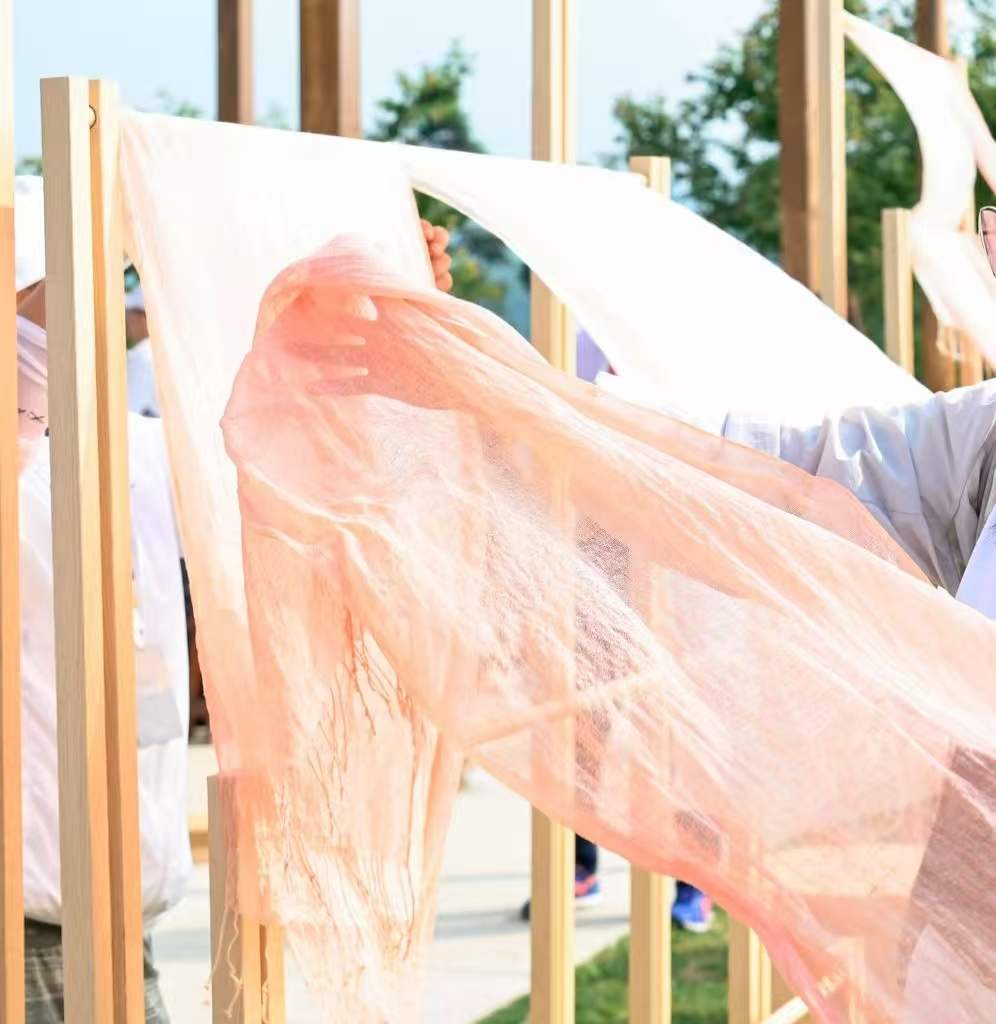
The scarf is made on pure cotton — the cloth that takes the tea fullest and richest. The tannins settle deep into the fiber, giving a warm, saturated brown-gold that reads as comfort: soft against the skin, easy to live with, good in every season.
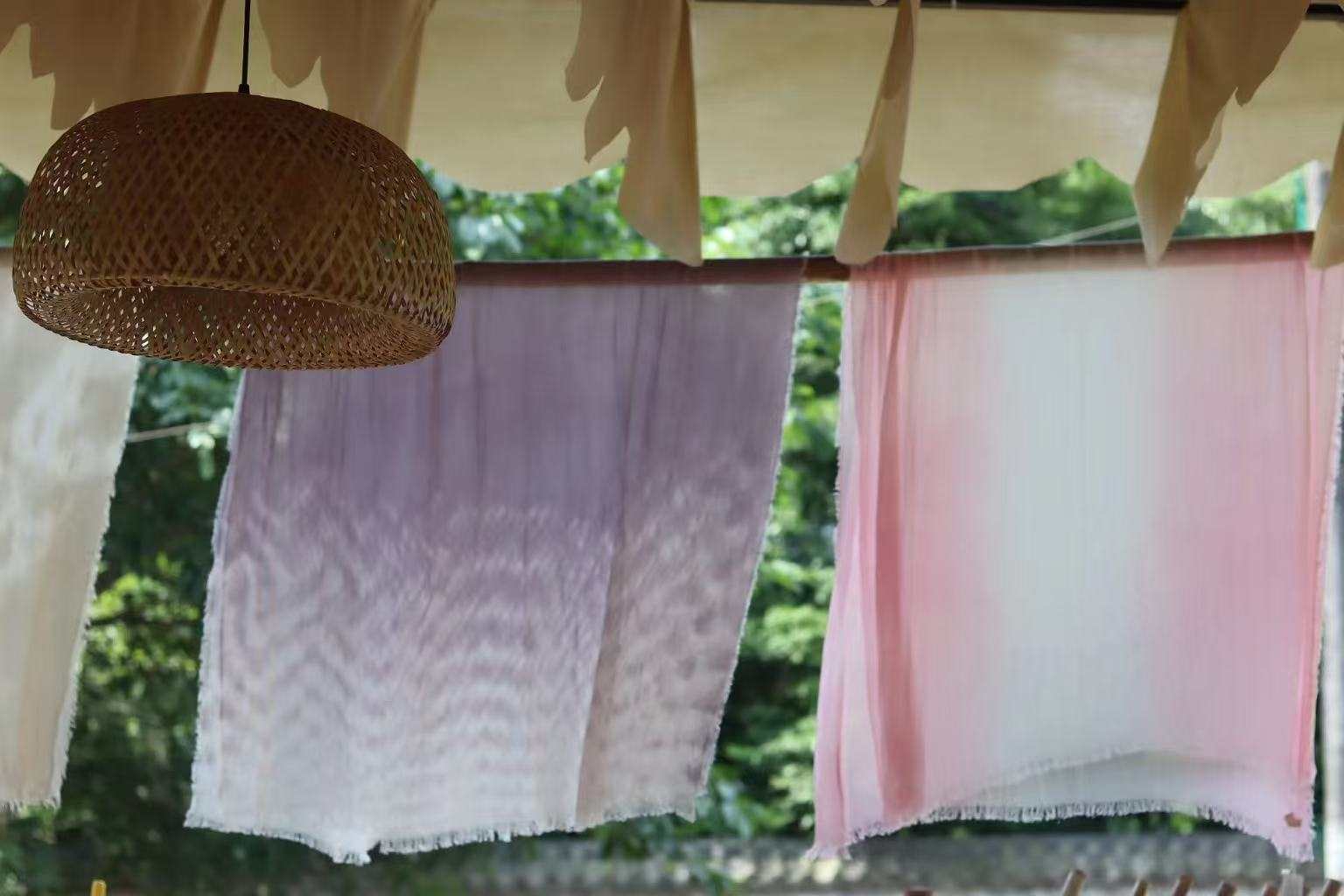
No Two Scarves, Ever
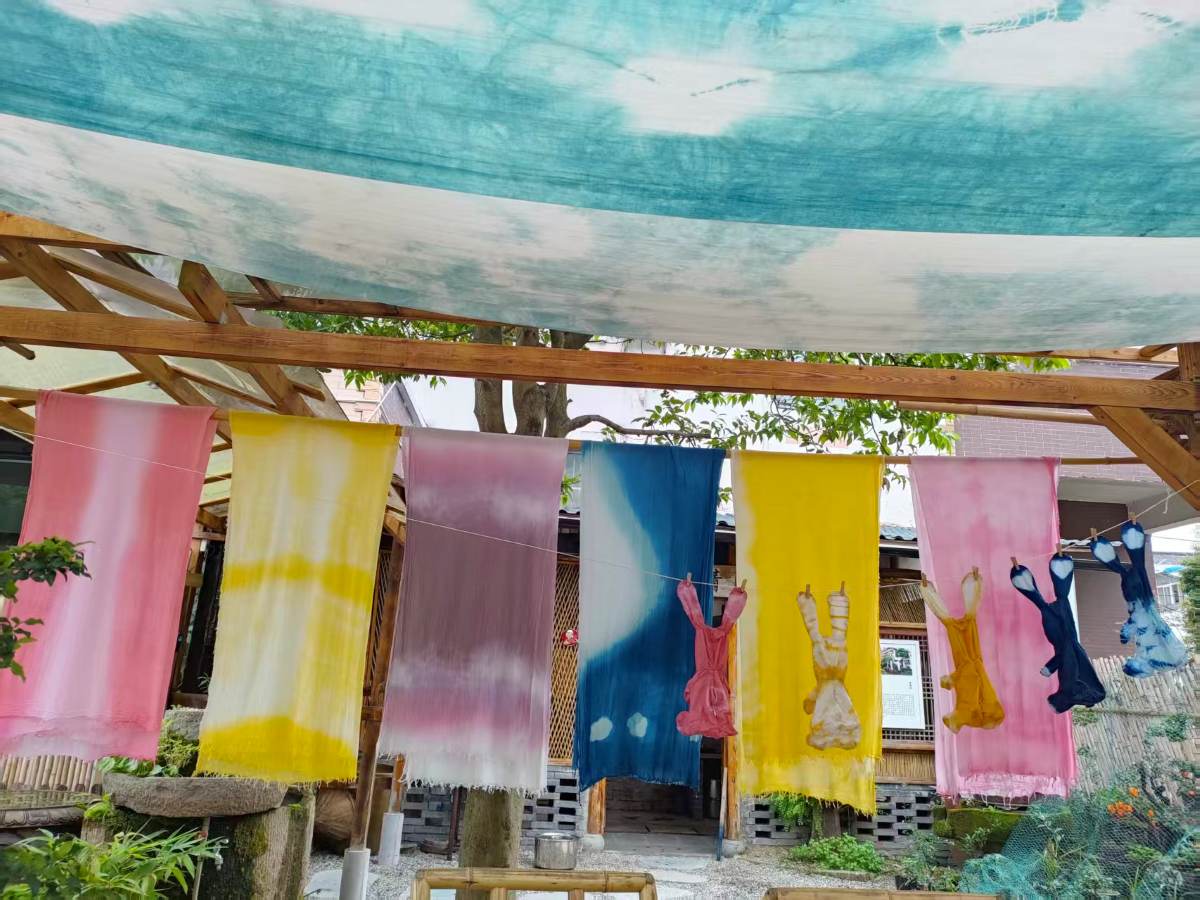
Because each scarf is tied by hand, the pattern answers to things that cannot be repeated: how tightly the fold was bound, how long the cloth steeped, how strong that season's leaves happened to be. One batch dried on a humid afternoon came out a full shade deeper. None of this is a defect. It is the difference between a color applied and a color grown - the scarf carries the fingerprint of its own afternoon, and the one you receive exists nowhere else on earth.
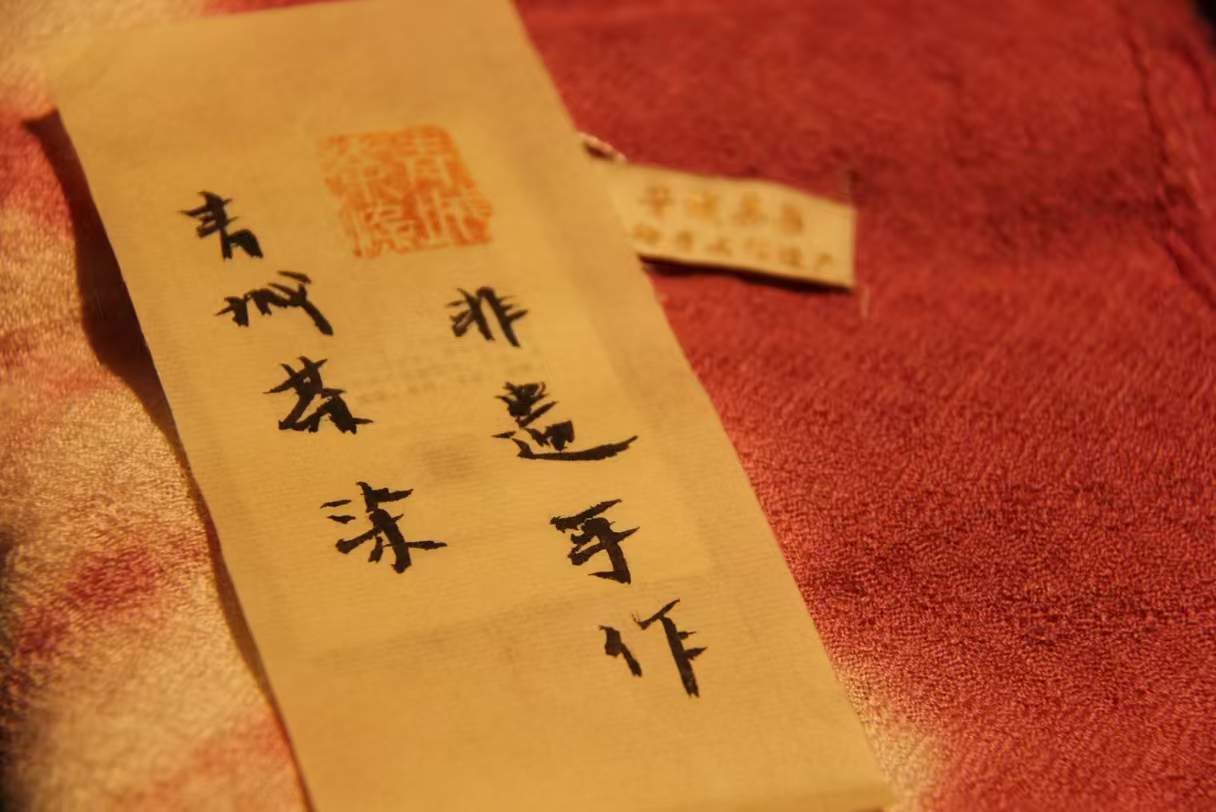
Wearing It Well
Tea tannins are stable but living. Wash the scarf by hand in cool water with a mild soap, especially in the first two washes. Dry it in shade - direct sun is the natural enemy of every plant dye. The color will deepen and mellow over the years you wear it, settling into something between what the mountain made and what you have made of it.
That is the quiet promise of the whole craft: no two scarves alike, no two years alike, and nothing in it that was not once alive.
If this craft belongs in your winter, every colorway is dyed by hand in the same foothill workshop — see the Qingcheng Tea-Dyed Scarf in Tea Smoke, or browse all six colors in the scarf collection.
---
Last Updated: Sep 07, 2026 · Dyeing steps and the 1908 workshop lineage verified with our partner dye workshop, Sichuan.
Disclaimer: Plant-dyed textiles vary naturally in color between batches, and slight fading over time is characteristic of natural dyes rather than a manufacturing defect. Color transfer is possible in the first washes - launder separately. Product specifications may be updated; see the product page for current details.
Sources:
- Tea-tannin dyeing practice since 1908, verified with our partner dye workshop, Sichuan
- Mount Qingcheng and the Dujiangyan Irrigation System, UNESCO World Heritage listing (2000)
- Heritage notes on the Qingcheng tea-growing valleys, Qingcheng Tea Dyeing Workshop
- On-the-ground verification by our Local Guide Team, Chengdu (Sep 2026)