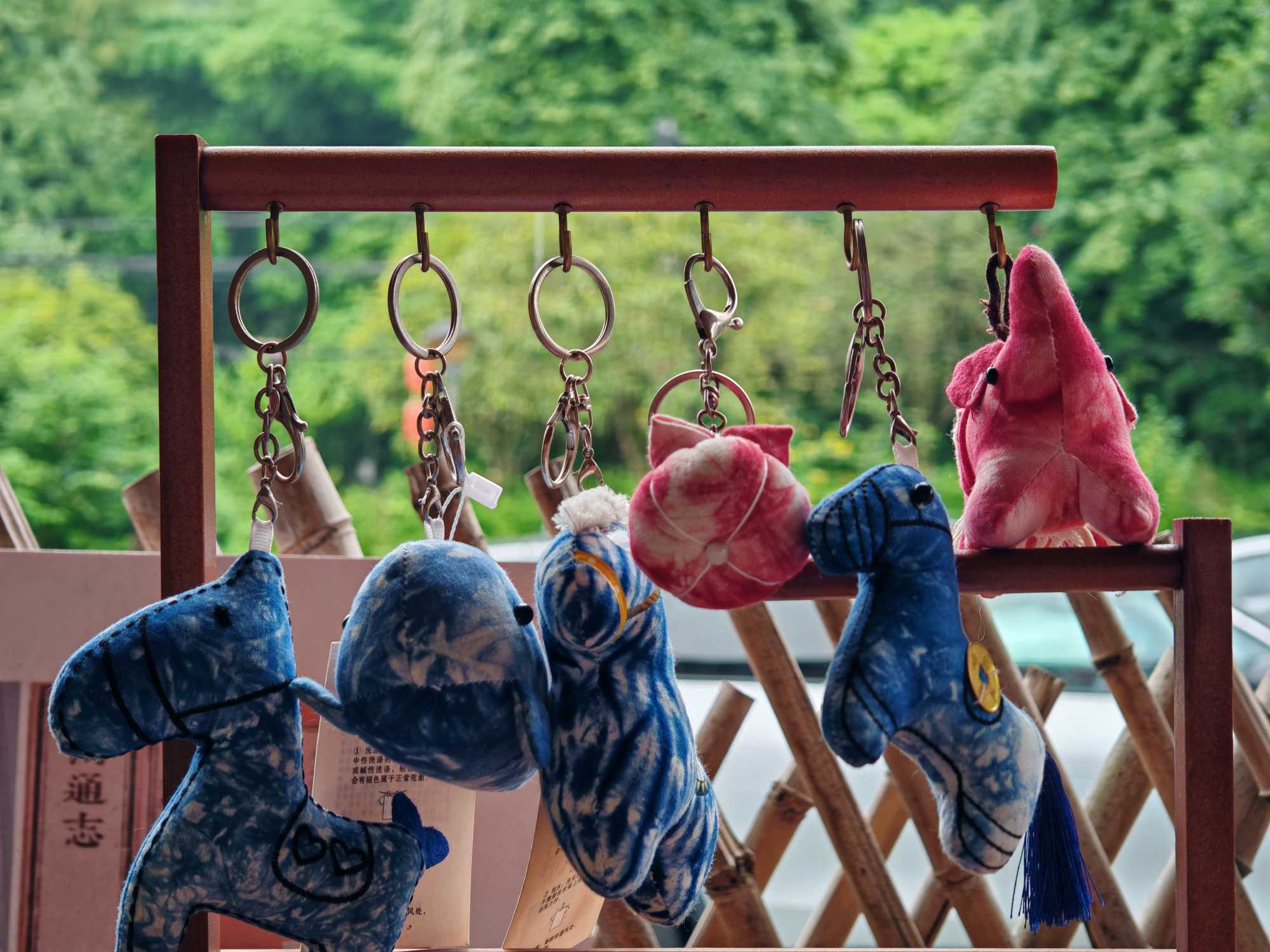
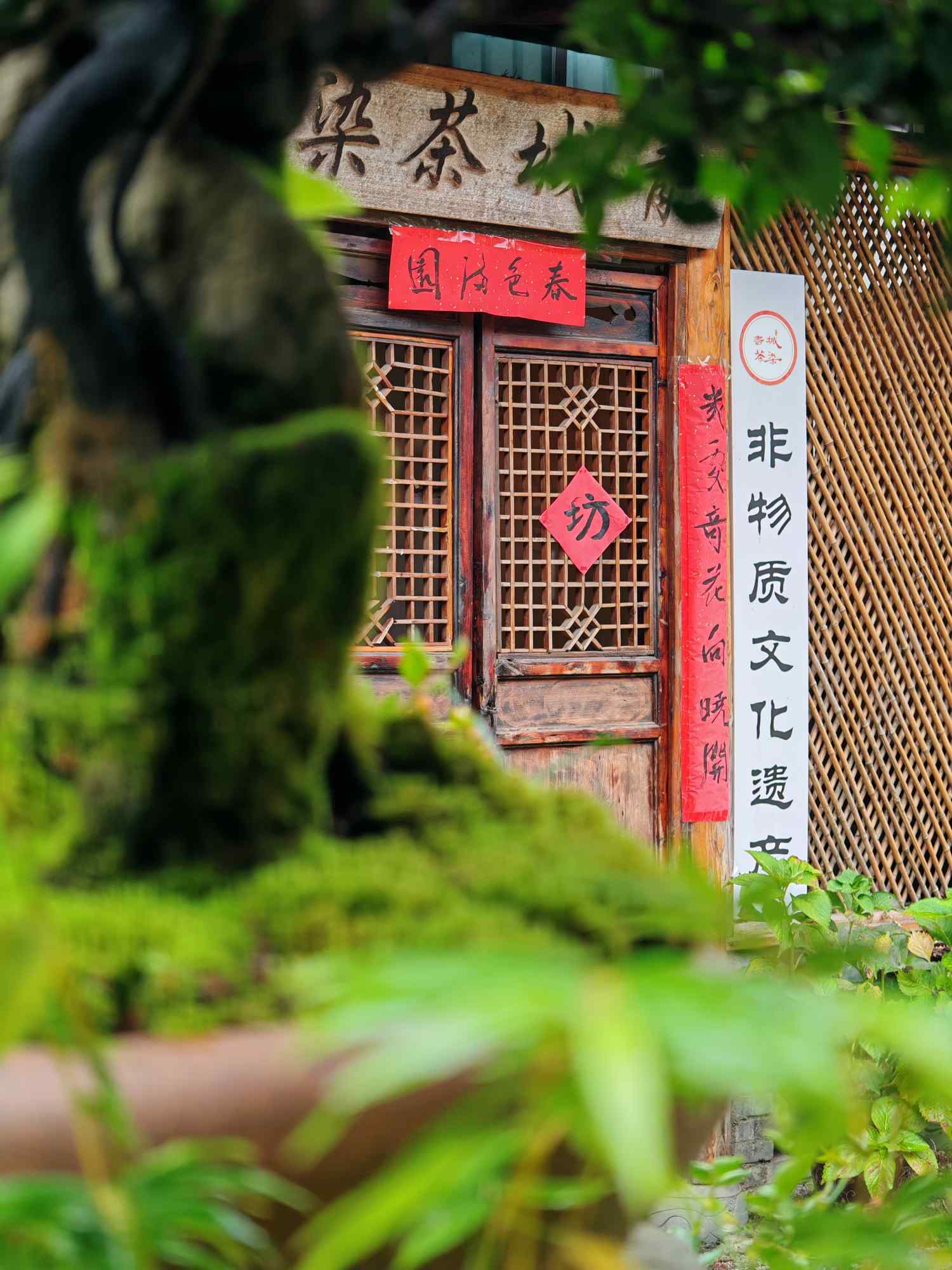
Walk into the workshops below Qingcheng Mountain on a dry afternoon and the smell finds you before anything else: tea, boiling - not for drinking, but for cloth. Stay a while and you notice what the pot is really feeding. On a wooden rack by the window, a row of small cloth animals turns slowly in the air - elephants, tigers, horses, fish - in rose, indigo and amber, every one of them stitched by hand from fabric that has just come out of that bath.
This is the story of the Qingcheng Tea-Dyed Charm, co-created by the Qingcheng Tea Dyeing Workshop and PawprintClaw. It is the smallest thing our workshops make, and it answers a question a scarf never could: what happens when a hundred-year dyeing craft stops being something you wear, and becomes something you carry.
The Color Comes First
Everything about a tea-dyed charm begins with cloth that already exists, and cloth cannot be rushed. Local Qingcheng leaves are simmered into a dye bath, and the fabric goes in unbleached and undyed - dipped, wrung and dipped again by hand, then hung in the shade to dry. There is no synthetic color in it and no chemical fixative: the tannins in the leaf bond to plant fiber by themselves, which is why the color sinks into the weave instead of sitting on top of it.
That is also where the pattern comes from. It is not printed. It is the way the tea runs, pools and dries inside the folds the maker pinned and bound with her own hands. Where the cloth was bunched tight, the dye stops short and leaves the weave pale. Where it hung loose, the color sinks in deep and stays. The result is mottled and clouded, closer to the grain of old wood than to anything a machine would produce, and warm in a way that only a living dye can be.
The cloth used for the charms is a soft, dense cotton - firm enough to hold its shape once it has been cut into a small animal, gentle enough to sit against a wrist or a bag strap all day. The dyeing line behind it has run in these foothill workshops since 1908, and it is now in the hands of the fifth generation.
Then It Has to Be Sewn
A charm is small. A finished one sits in a palm with room to spare, and that smallness is exactly why almost none of the work can be handed to a machine. Every piece is drawn, cut, pinned, stuffed and sewn by hand: the body first, then the limbs and the ears, then the embroidery that finally gives it a face.
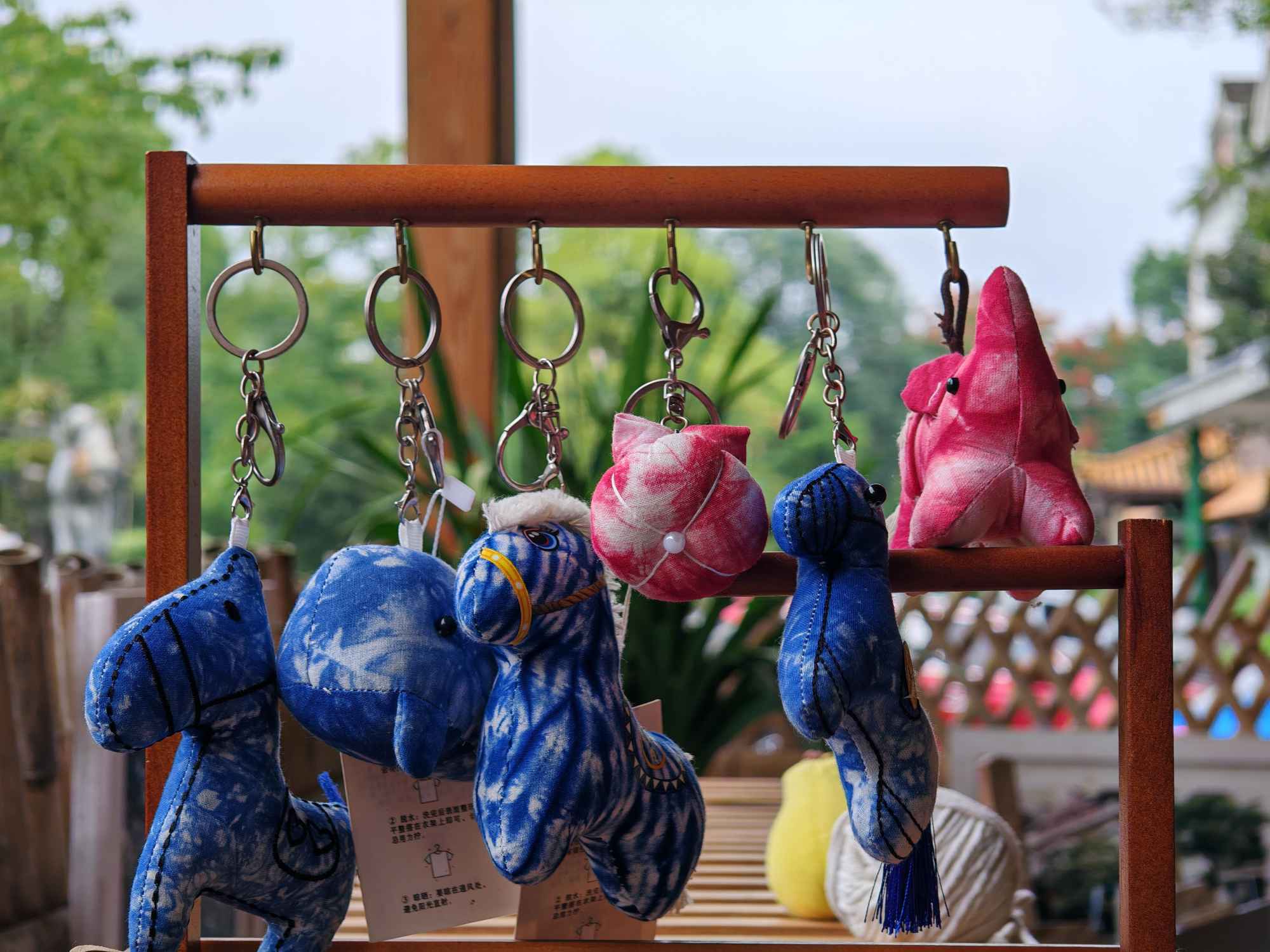
That last stage is where the makers spend the most time. A muzzle is satin-stitched in a color that has to hold its own against the mottling underneath it. An eye is worked in a few short stitches, and the tilt of them decides whether the animal looks attentive, sleepy or quietly amused. A saddle is outlined in gold thread and closed with a knot that has to land exactly right, because there is no seam in a small charm deep enough to hide a mistake.
Why No Two Are Alike
Cut two squares from the same length of tea-dyed cloth and they will not match. The dye never settles evenly, so the grain drifts across the fabric in whatever way the afternoon decided, and the spot a charm is cut from decides that character's entire complexion - one elephant comes out dark down the trunk, another pale across the back. Nobody plans this. Nobody can.
Add a hand on the scissors and a hand on the needle, and the small differences multiply. An ear leans a little further forward on one tiger than on the next. A smile sits a fraction off-center. A blue charm comes out bluer than its twin, because the corner of cloth it was cut from held more tea. Every charm carries the fingerprint of its own afternoon, and the one that reaches you exists nowhere else on earth.
None of this is a defect. It is the difference between a shape printed and a shape grown. It is also why a tea-dyed charm keeps a slow life of its own: tea tannins are plant matter, and plant matter deepens and mellows with the years, the way leather does.
Carrying It
The charm is finished with a hand-set metal clasp and ring, so it hangs happily from a bag strap, a zip, a keyring or the loop of a favorite jacket. It also makes a particular kind of gift, because it is effortless to give and impossible to duplicate - and it arrives with its heritage card already attached, so nothing needs wrapping.
Treat it like the textile it is. Keep it out of the washing machine and away from the bath; a damp cloth and fresh air are all it ever needs. Dry it in shade - direct sun is the natural enemy of every plant dye. And expect it to change, slowly, in the direction of wherever you take it. Tannins keep working. That is the point of them.
That is the whole promise of this craft, made pocket-sized: no two charms alike, no two years alike, and nothing in it that was not once alive.
Want to carry one home? Each design in the shop — the pink elephant, the whale, the horses — is cut, stuffed and embroidered by hand in the very workshop you just read about, and arrives with its heritage card attached. Browse the full tea-dyed charm collection and pick your character.
---
Last Updated: Sep 15, 2026 · Dyeing process and the 1908 workshop lineage verified with our partner dye workshop, Sichuan.
Disclaimer: Plant-dyed textiles vary naturally in color between batches, and slight fading over time is characteristic of natural tea dye rather than a manufacturing defect. Color transfer is possible during the first weeks - keep the charm away from light-colored fabric while damp. Every charm is cut, stuffed and embroidered by hand, so shape, expression and stitching differ slightly from the photographs. Designs rotate as the workshop finishes new pieces; the character shown on your order confirmation is the one we will match. Product specifications may be updated; see the product page for current details.
Sources:
- Tea-tannin dyeing practice since 1908, verified with our partner dye workshop, Sichuan
- Heritage notes on Qingcheng tea dyeing and its fifth-generation lineage, Qingcheng Tea Dyeing Workshop
- Mount Qingcheng and the Dujiangyan Irrigation System, UNESCO World Heritage listing (2000)
- On-the-ground verification by our Local Guide Team, Chengdu (Sep 2026)