You've seen the video of a panda tumbling down a slope. You've booked the flight. And then it hits you: *at the Chengdu Panda Base, timing is everything.* Arrive at 7:30 a.m. and you'll watch pandas rip through fresh bamboo, wrestle, and climb. Arrive at noon and you'll stare at a row of sleeping black-and-white backs — or an empty enclosure entirely.
First Time at the Panda Base? Start Here
"Chengdu panda base" is one of the most-searched travel terms in China, and this is the guide we wish every visitor had. It's written and field-tested by our team in Chengdu — updated as of October 2026.
1. What Is the Chengdu Panda Base?
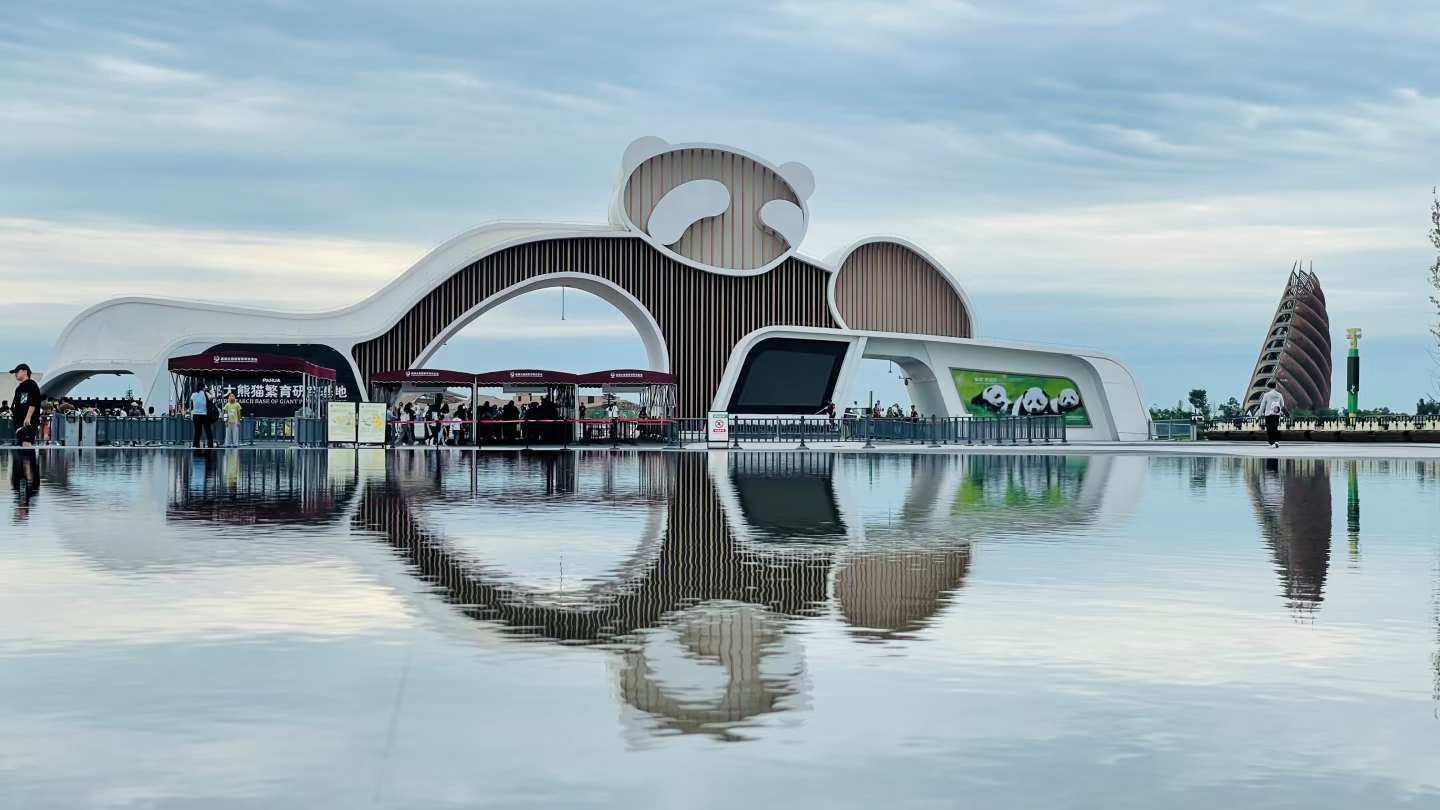
The Chengdu Research Base of Giant Panda Breeding (成都大熊猫繁育研究基地) — everyone calls it the Chengdu Panda Base — is the world's most famous panda facility and home to the largest captive panda population on earth. It sits at 1375 Panda Avenue in Chengdu's Chenghua District, about 10 km (6 miles) north of the city center, close enough that you can ride the metro from downtown and still be back for a late lunch.
The numbers tell the story: the base houses roughly 200 giant pandas, plus a separate colony of red pandas. Its breeding program has been so successful that it now anchors the global panda conservation effort, and the base welcomes several million visitors a year. If you want to watch a giant panda eat bamboo at arm's length, this is the easiest place on the planet to do it.
The base is split into two zones, and knowing them will shape your day:
- South Zone (the original area) — the headline enclosures: the Sun and Moon delivery rooms (the nurseries), the juvenile and adult villas, and Villa 6, where the internet-famous Huahua lives.
- West Zone (the expansion) — newer and far quieter. It holds Adventure Valley, Infinite Hills, the 69.8-meter Panda Tower, and the Panda Meeting Hall. More pandas, fewer people, better for avoiding crowds.
Is it worth visiting? Yes — unambiguously. It's the single best wildlife encounter in Sichuan. But "worth it" depends on arriving early and choosing the right gate.
2. Why Go Early: When Pandas Are Most Active
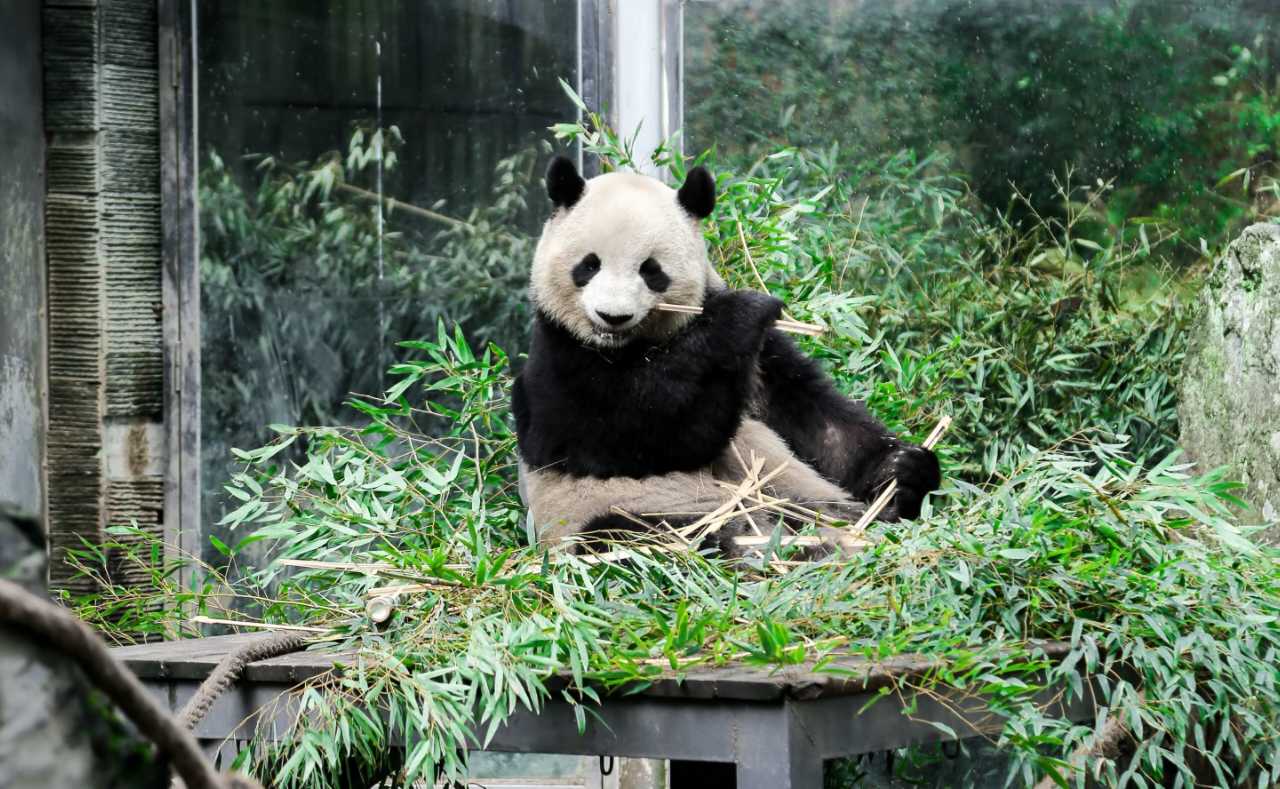
Giant pandas are crepuscular — most active at dawn and dusk. At the base, keepers put out fresh bamboo first thing, and the pandas dive into their main meal between roughly 7:30 and 10:30 a.m. That window is the show: pandas strip bamboo with their specialized "pseudo-thumb," climb, tumble, and generally act like pandas. By 11 a.m. most are asleep. By early afternoon the enclosures are a field of motionless black-and-white shapes — what regulars call "panda blankets."
There's a second reason to go early: heat. When the temperature climbs past about 26°C (79°F), keepers move the pandas into air-conditioned indoor rooms. On a July or August afternoon you can walk past enclosure after enclosure and see nothing at all. The animals are fine — they're simply inside, staying cool.
- 7:30–10:30 a.m. — pandas eat, play, and climb. This is the golden window.
- 10:30 a.m.–noon — activity winds down; the last pandas drift off.
- Noon–4 p.m. — most pandas sleep (or are indoors in summer). Lowest value.
- Around 3 p.m. — a partial second wind for the afternoon feed, far less reliable than the morning.
"Pro tip: Be at the gate 15–20 minutes before opening. The first 30 minutes inside are worth more than the next three hours. In peak season, the difference between the 7:30 and the 9:00 crowd is enormous."
3. Tickets, Prices & Booking
The base runs on online, real-name reservations — there is no full walk-up ticket window, and on peak days the morning session can sell out. Here is the 2026 ticket structure (prices from the base's official ticketing page):
| Ticket | Price | Who it's for | ID needed |
|---|---|---|---|
| Adult | ¥55 (~US$8) | Ages 18–59 | ID / passport at the gate |
| Student | ¥27 (half) | Undergraduate and below | ID + valid student card |
| Senior | Free (no booking) | 60 and above | ID at the gate |
| Child | Free (no booking) | Under 6, or under 1.3 m | Document check |
| Annual pass | ¥168 / year | Ages 7–59, one entry per day | ID at the gate |
| Concession | Free (ticket still required) | Military, disabled, firefighters, blood donors | Concession card + ID |
Source: official ticketing page of the Chengdu Research Base of Giant Panda Breeding (panda.org.cn), verified October 2026.
The booking rules matter as much as the price:
- Book up to 14 days ahead through the official WeChat account / mini-program or an authorized platform (Ctrip, Trip.com, Meituan). On weekends and national holidays the morning slot can vanish within minutes of release — set a reminder for the 14-day mark.
- Daily cap: 85,000 visitors (morning 45,000 / afternoon 40,000). Once a session sells out, it's gone for the day.
- Bring your original passport. Foreign visitors use a dedicated non-ID verification lane at the gate, and a passport number books exactly the same way a Chinese ID does.
- Time slots are strict: a morning ticket enters 7:30–12:00; an afternoon ticket enters 12:00–17:00 (earlier in winter). You can't cross between them.
- Refunds: free before 5 p.m. on the visit day; a 20% fee within 7 days after; nothing after that.
If you'd rather skip the reservation puzzle — or want the base bundled with transport and a guide — our Chengdu Panda Base tickets & day tour handles the booking, the early start, and the ride so you can simply show up.
4. Getting from Chengdu to the Panda Base
The base has two gates, and the one you choose changes your whole day. The South Gate (original area) is where Huahua and the nurseries are — and where the crowds converge. The West Gate (expansion) is quieter, with more pandas and shorter lines. Pick based on your goal.
### Metro + shuttle (best value)
Metro Line 3 is your backbone, and both gates have a dedicated shuttle:
- To the South Gate (for Huahua): ride Line 3 to Panda Avenue (Xiongmao Dadao) station, take Exit A, then Shuttle Bus 408 straight to the South Gate (¥2, ~10 minutes). Or ride to Zoo station and take bus 655 or 87.
- To the West Gate (fewer people): ride Line 3 to Military General Hospital station, take Exit B, then Shuttle Bus 409 to the West Gate (¥2, ~10 minutes).
The shuttles run roughly 8:00 a.m.–5:00 p.m. and use a "bus waits for people" system, so there's almost no wait. The whole round trip costs less than a coffee.
### Taxi / DiDi
A taxi or DiDi is the simplest door-to-door option — especially if you're chasing the 7:30 opening and don't want to gamble on metro timing. Set your destination to the gate you want. Official reference fares:
| From | Cost | Time |
|---|---|---|
| Shuangliu Int'l Airport (CTU) | ~ ¥100 | 40–50 min |
| Tianfu Int'l Airport (TFU) | ~ ¥200 | 60–70 min |
| Downtown (Chunxi Road) | ~ ¥40 | 25–35 min |
| Chengdu East Railway Station | ~ ¥40 | 25–30 min |
On holidays, the roads into the base jam badly — build in extra time, or stick to the metro.
### Guided transport / tourist shuttle
Dedicated tourist shuttles run from Chunxi Road, Kuanzhai Alley, and other downtown spots straight to the base (search "景区直通车" / Chengdu tourist shuttle, roughly ¥5–10). If you're staying in a hotel district, this is the most stress-free option.
"Pro tip: Whichever gate you choose, screenshot the Chinese name of your gate (南门 for South Gate, 西门 for West Gate) to show your driver. Very few drivers read pinyin."
5. Seeing Huahua: What to Expect
Huahua (和花, also spelled Hehua) is the base's undisputed star — a female panda born in July 2020 with famously short legs, a round face, and a waddling walk that turned her into a social-media phenomenon. She lives in Villa 6 in the South Zone, and seeing her is a genuine project.
- She only appears in the morning. She's typically visible during the morning activity window; by afternoon she's often indoors.
- She rests on Mondays (except public holidays). If Huahua is the whole reason for your trip, do not come on a Monday.
- Viewing is timed. The base runs a single-file loop with a strict 2–3 minute viewing limit per person.
- The queue can run 1–2 hours in peak season — and, crucially, a panda is a free agent. She may wander inside, and queuing does not guarantee a sighting.
Our advice: if you want to try, enter at the South Gate right at opening and walk straight to Villa 6 before the crowd thickens. If you'd rather not burn your morning in a line, skip her and head for the Sun and Moon delivery rooms, where cubs — small, clumsy, and every bit as charming — are usually on view with far shorter queues. There's a saying among regulars: *"Huahua is only one, but there are hundreds of lovely pandas."*
6. Chengdu vs Dujiangyan Panda Base: Which One?
This is the question every Sichuan traveler eventually asks. Chengdu has more than one panda experience, and they are genuinely different.
| Chengdu Panda Base | Dujiangyan Panda Valley | |
|---|---|---|
| Distance from Chengdu | ~10 km, ~30 min | ~60 km, ~1 hour |
| Pandas | ~200; most cubs, most "celebrities" | Fewer, in a more natural setting |
| Setting | Urban, busy park | Mountain valley, forested |
| Crowds | Heavy in peak season | Noticeably lighter |
| Best for | First-timers, families, short trips | Nature lovers, photographers, repeat visitors |
How we'd decide:
- First time in Chengdu, limited time, or traveling with kids — the classic choice is the Chengdu Panda Base: the most pandas, the most cubs, the easiest logistics.
- You want a quieter, more natural experience and don't mind a day trip — pick Dujiangyan Panda Valley, where red pandas roam free and the forested setting feels far removed from a city zoo.
- You want to volunteer or get behind the scenes — that's a different decision entirely (see the next two sections), and it changes the base you choose.
- Time is tight but you want both — you can pair Dujiangyan with the Dujiangyan Irrigation System and Mount Qingcheng in one long day, but only with an early start and separate advance bookings.
For the full breakdown, see our Dujiangyan Panda Base guide.
7. Can You Hold a Panda in Chengdu? The Honest Answer
No — you cannot hold a panda anywhere in China. If a tour operator tells you otherwise, walk away.
The reason is animal welfare. Close contact exposes pandas to human bacteria and diseases (canine distemper is a serious risk), and the stress is hard on the animals.
Holding, hugging, or directly touching giant pandas has been banned across China's panda bases since around 2018, with even stricter health protocols enforced today. Old blog posts and social-media reels still show "hold a panda" photo ops, but those programs no longer exist — you cannot pay your way into one.
The closest legitimate interaction available today is the panda keeper volunteer program — a full day working alongside keepers at an authorized base. Contact is strictly supervised, does not involve holding, and happens through bars or barriers.
"Pro tip: If any operator on a street corner or a messaging app promises a "panda hug" for a fee, it is either illegal or a scam. The base has publicly warned that it never authorizes third parties to run these experiences."
8. Beyond Watching: Volunteer & Tour Experiences
If watching isn't enough, the panda keeper program lets you spend a day inside a working conservation center — cleaning enclosures, preparing bamboo, mixing "panda cake," and watching the keepers feed the animals up close. It's less cuddly and more satisfying than the old photo ops, and your donation directly funds panda care and research.
- A full day, roughly 8:30 a.m.–3:30 p.m., at an authorized base.
- A donation of about ¥900–1,200 (~US$125–165) per person.
- Age limits (generally 10–70) and a simple health declaration; under-10s can usually join as observers only.
- No perfume, nail polish, or heavy makeup — a panda's sense of smell is far sharper than a dog's.
- An official certificate and a souvenir at the end.
Important 2026 update: the Dujiangyan volunteer base closed for renovation in April 2026, with no confirmed reopening date. The operating volunteer sites are currently Wolong Shenshuping and Bifengxia (Ya'an), both a longer drive from Chengdu. Because openings and rules shift, book through an operator who confirms the day's arrangements in advance.
9. How Long Do You Need + a Perfect Morning Plan
Budget 3.5–5 hours for a satisfying visit. The base is large — the West Zone alone spans thousands of mu and the walking is hilly, so 20,000+ steps is normal. If you have less than two hours you can still see pandas, but you'll be sprinting.
- 7:15 a.m. — arrive at your chosen gate. (South Gate if Huahua is the priority; West Gate if you want calm.)
- 7:30 a.m. — enter at opening. Go directly to your priority: Villa 6 for Huahua, or the Sun/Moon delivery rooms for cubs.
- 8:00–10:00 a.m. — move through the active enclosures while pandas eat. This is prime time.
- 10:00–10:30 a.m. — Red Panda Yard, then the Panda Tower for the rooftop view (reservation required).
- 11:00 a.m. — wrap up. Most pandas are napping; beat the exit crowds.
- Optional — buy the ¥30 sightseeing bus pass if your legs are done; it's unlimited and covers the hilly stretches.
If you're building a wider Sichuan trip, the pandas are one of several unmissable stops.
10. Facilities, Food & Accessibility
The base is well-organized and foreigner-friendly, with a few quirks worth knowing.
- Getting around: the ¥30 sightseeing bus (unlimited rides, free for under-1.3 m children) is worth it — the base is spread out and hilly.
- Food & drink: cafés and snack kiosks exist, but prices are high and queues long. Bring water and a snack. You may bring your own food in, and picnicking is allowed in designated areas.
- Toilets: plentiful and clearly signed, but bring your own tissue — many don't supply it.
- Accessibility: main paths are paved and stroller/wheelchair-friendly, but the West Zone has slopes; the sightseeing bus helps. Ask staff about elevator access at the larger pavilions.
- Rules to respect: no feeding, no flash photography, no tapping on glass, no loud noise, no drones. Pandas startle easily, and feeding can make them sick. These rules are enforced.
FAQ + Planning Checklist
How much are Chengdu Panda Base tickets? ¥55 for adults (~US$8), ¥27 for students; free for seniors 60+ and children under 6 (or under 1.3 m).
Can I buy tickets at the gate? Only for same-day tickets if the quota hasn't sold out; peak sessions often sell out online. Book 14 days ahead.
What time should I arrive? 7:15–7:30 a.m. at opening for the best experience. Avoid arriving after 10 a.m.
How do I get there by metro? Line 3; Panda Avenue station (Exit A) → shuttle 408 to the South Gate, or Military General Hospital station (Exit B) → shuttle 409 to the West Gate.
How long do I need at the base? 3.5–5 hours for a full visit; 2 hours minimum for a rushed one.
Can I bring food? Yes — you can bring your own food and eat in designated areas.
Can you hold a panda? No. Holding and hugging are banned. See the volunteer program for the closest regulated alternative.
Is the base open in winter? Yes, year-round, with shorter hours (8:00 a.m.–5:30 p.m. November–February).
Planning checklist:
- ☐ Book tickets online, 14 days ahead in peak season
- ☐ Carry your original passport
- ☐ Decide your gate (South for Huahua, West for calm)
- ☐ Arrive 15 minutes before opening
- ☐ Wear comfortable shoes and dark clothing for glass viewing
- ☐ Bring water, a snack, tissue, and a power bank
- ☐ Download an offline Chinese map / translation app
Shop the Story: Handmade Panda Plush
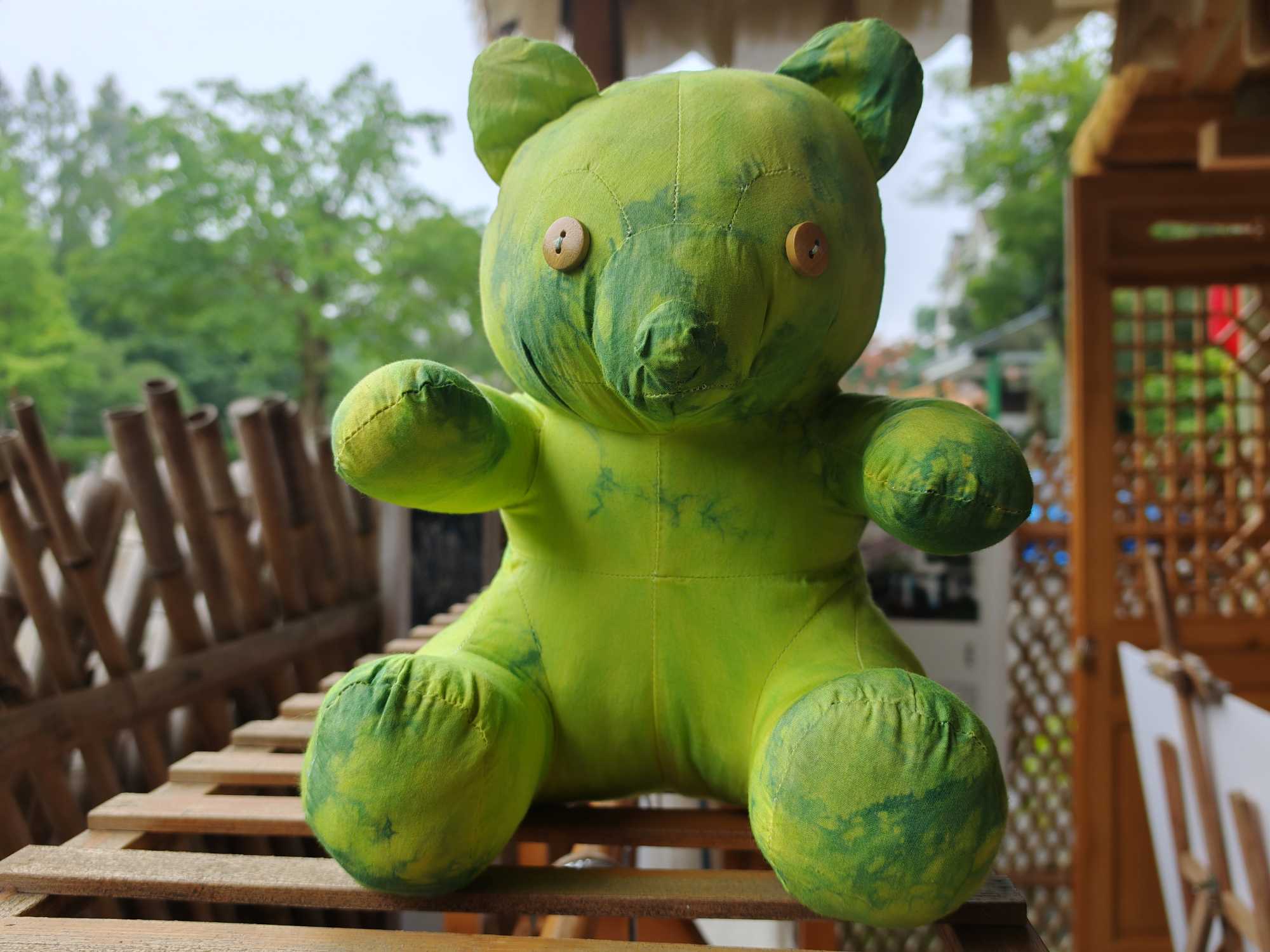
The morning will end with your camera full of pandas — why not let it end with something you can actually hold? Our handmade panda plush collection is sewn and tea-dyed by artisans in Dujiangyan, using the traditional tea-dye technique practiced here since 1908. Each one is unique, and no two are quite the same shade of amber. It's a small, made-by-hand piece of Sichuan to take home — and a fair-trade alternative to the mass-produced panda toys in the base gift shop.
Last Updated: October 10, 2026 · This article is reviewed by our Chengdu-based team and re-verified quarterly.
Disclaimer: Ticket prices, opening hours, and booking rules are set by the Chengdu Research Base of Giant Panda Breeding and are subject to change without notice. This article is for general guidance only. Always confirm current details on the base's official channels before you travel.
Sources:
- Chengdu Research Base of Giant Panda Breeding — official ticketing and transportation pages: panda.org.cn
- Chengdu Rail Transit Group — chengdurail.com
- National Immigration Administration of China — visa and entry notices
- Chengdu Public Transport / Chengdu Tourist Sightseeing Bus official platforms